Laminate vs Tile in Kitchen Floors: Pros, Cons and Which to Choose

Water on the floor, a dropped pan, grease by the sink, bare feet in the morning: how laminate and ceramic tile handle each, and which trade-off suits your kitchen.
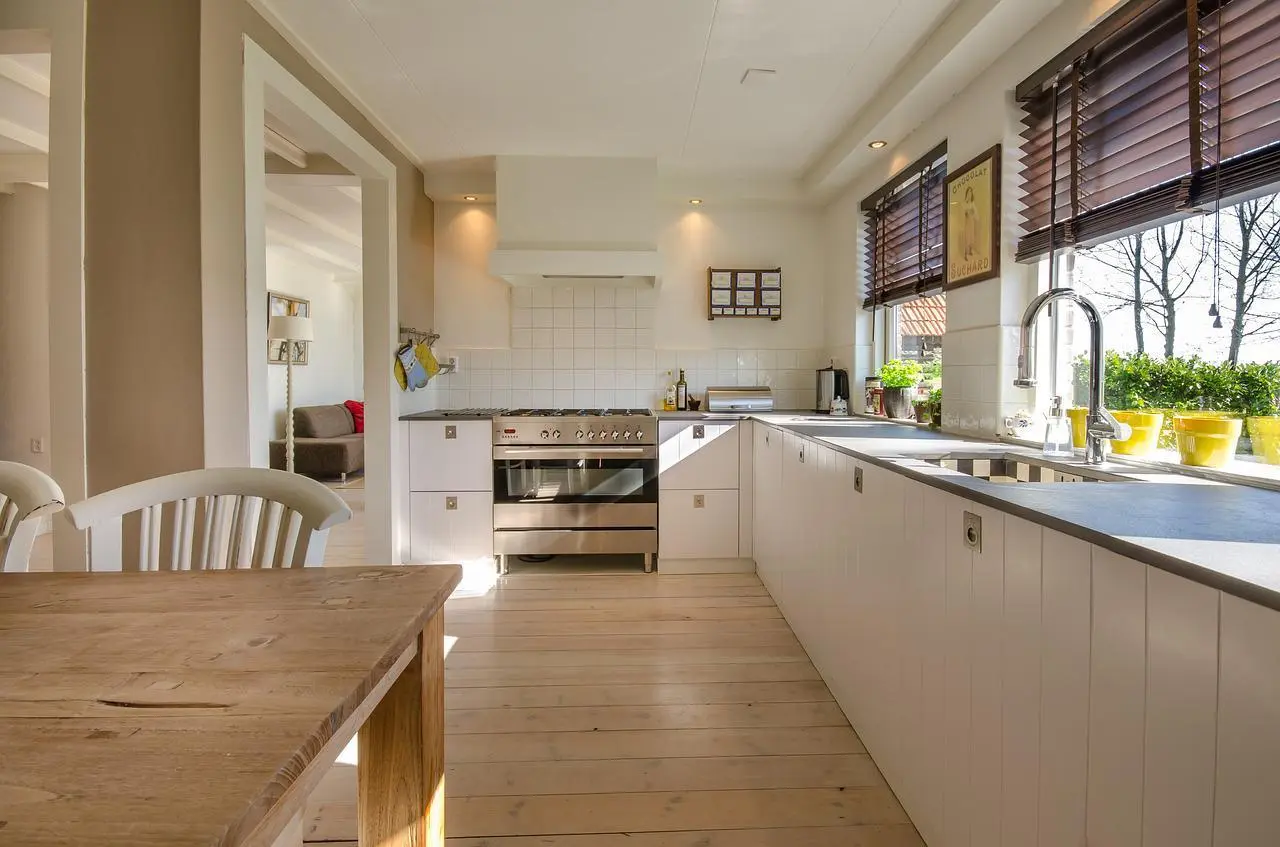
You are renovating the kitchen, and two samples sit on the floor: a laminate plank and a ceramic tile. The shop says both are fine for kitchens. Both are popular and useful, and each has pros and cons. The question is which of them your kitchen will forgive.
This guide compares laminate vs tile in kitchen floors on what a kitchen actually does to a floor. First, the two materials in one line each:
- Laminate is a thick board made of wood fibres, with a printed surface.
- Ceramic tile is a large square plate of fired clay, used for floors and walls.
What kitchen flooring is waterproof, tough and easy to clean?
Ceramic tile: water does not harm it, it does not burn, and dirt wipes off easily. Laminate is cheaper and warmer, but water damages it.
To see why, start with four things a kitchen floor must survive.
- Water. Water will fall on a kitchen floor sooner or later, from the sink or a pot. Water resistance is not optional here.
- Impact. At some point a heavy frying pan or another heavy utensil slips out of someone's hands. The floor must take the hit.
- Grease and hard cleaning. Near the sink and the stove, greasy stains can build up that only a scraper, a metal brush and an abrasive powder remove. Not every covering survives that kind of cleaning, so the floor must be easy to keep clean.
- Wear. People cross the kitchen many times a day. The floor must resist wear for years, not months.
Now let's see how each material meets these four needs.
Is laminate good for kitchens?
It can be, if you accept the trade-off: laminate is cheap, warm and easy to replace, but it does not like water, and a kitchen floor gets wet.
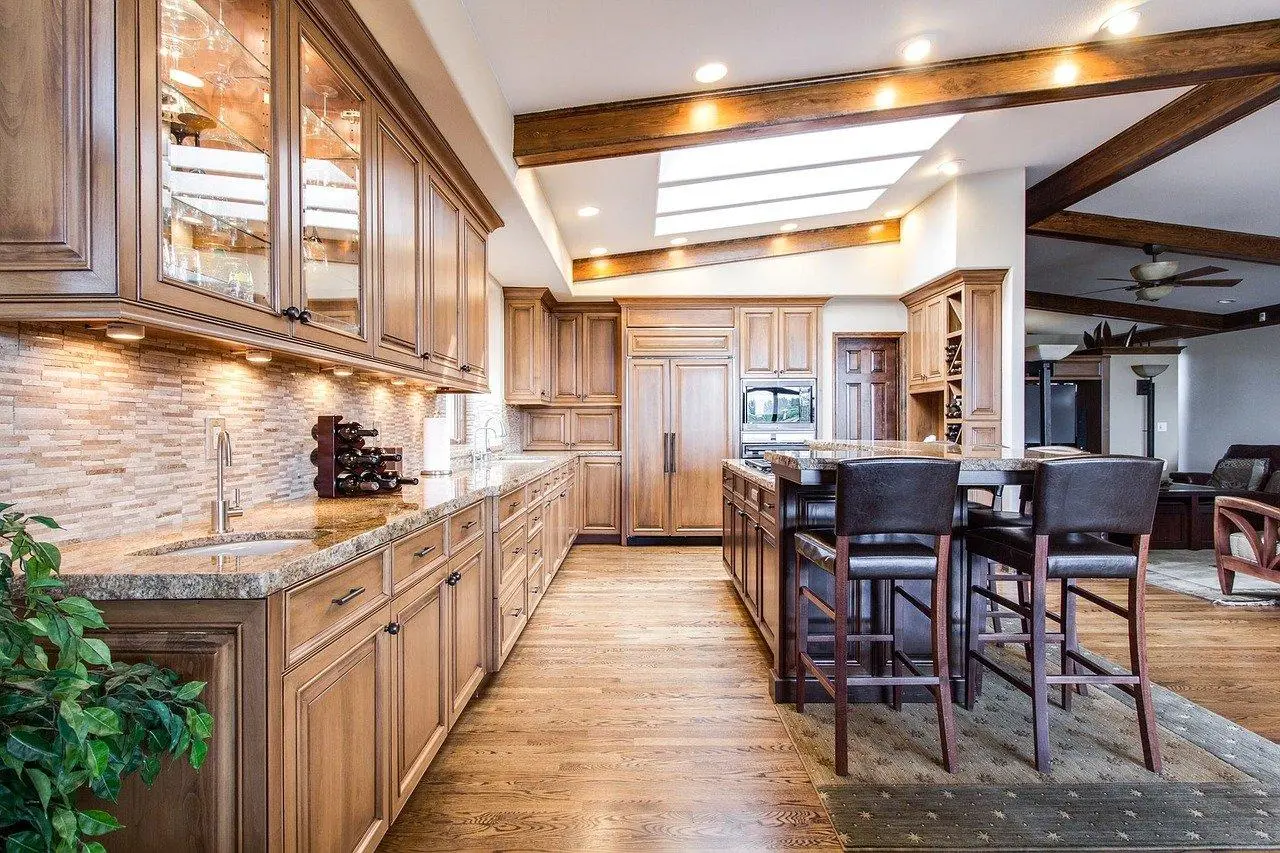
What you get with laminate:
- A lower price. Laminate is the budget option of the two.
- Many looks. It can copy wood, such as maple, oak or cherry, which also makes a room feel warmer. It can also copy stone, such as granite.
- Strength. Moving furniture, pet claws and heels do not leave marks on a good laminate.
- Quiet. It has fairly good sound insulation.
- Warmth. Laminate quickly takes on the room temperature, so it feels warm even under bare feet.
- Easy to change. Laminate is not glued to the base floor. You can lift it and replace it with another floor when you want a change.
What it costs you:
- It is not natural wood. Laminate is made of wood fibres and synthetic materials, so it is not an environmentally friendly product.
- A short life. As a rule, people replace laminate after 5-7 years.
- Water. Moisture spoils its look and then the material itself.
- Heat. Laminate does not tolerate high temperatures. It catches fire quickly, and heat leaves marks on its surface. Next to a stove, this is a safety question, not only a looks question.
Common mistake: laying laminate on an uneven base. Laminate must go on a level surface only, and the installation takes effort and patience. Check the base floor before you buy the planks.
Ceramic tile in the kitchen: pros and cons
Tile is as popular as laminate, and the choice between them is not always obvious. Start with the downsides, because they are the reason people hesitate.
What it costs you:
- A higher price. Tile costs more than laminate.
- Cold. Ceramic is a cold material. Without shoes or slippers, you will feel it every morning.
- Noise. Tile has low sound insulation. When you lay it, it is a good idea to add a soundproof layer.
- Hard on dishes. A plate or a cup that falls on tile will almost certainly break, and the tile itself can crack.
- A hard installation. Laying tile takes time, costs more, and makes a lot of dust and mess.
What you get with tile:
- Easy cleaning. You do not have to worry whether the cloth is too wet or too dry. Dirt comes off easily either way.
- Many patterns. You can lay tiles in many different patterns. Laminate gives you far fewer options.
- Fire safety. Tile does not burn, and it conducts heat well. In a kitchen, this matters.
- A long life. Tile lasts longer than laminate and other materials in a kitchen.
Which is better, tile or laminate flooring?
For a kitchen floor, tile handles water, fire and cleaning better. Laminate costs less and feels warmer under bare feet.
Both materials have earned their place as popular floors, and each has its own drawbacks. So start from your needs and your budget.
- Choose laminate if the budget is tight and you want a warm, quiet floor. Accept the risk: one flood, and in a kitchen a flood can happen, can ruin it. Then the repair costs you money.
- Choose tile if water and heat worry you more than comfort. Water does it no harm. The price is a cold, hard floor that is less comfortable than laminate.
There is no single right answer. After reading both lists, you can weigh the trade-offs against how you use your kitchen and make your own decision.
See both floors on your own plan
A sample on the shop floor does not show you the whole kitchen. In Home Planner, measure your kitchen and draw it as a 2D plan, then see it in 3D. Choose Change flooring, try a laminate, then a tile, and compare the two next to your own cabinets. You can also furnish the room with products from real brands, render an image of the result, or start from a ready-made design for any room in your home.
Try it on your own project
Free room planner and interior design app