How to Choose Kitchen Floor Tiles: 4 Checks Before You Buy

Four checks for a kitchen floor: wear class, resistance to cleaning products, grip on a wet floor, and a color that suits your furniture. The label on the box answers the first three.
A pan slips off the stove. Water splashes from the sink. The floor gets washed with a strong cleaner, again. The kitchen is the room you use most often, and its floor takes all of it.
The kitchen is also no longer only a place to cook. For many families it is where they rest and meet, so the floor has to look good and work hard at the same time. This guide shows how to choose kitchen floor tiles in four checks: wear, cleaning products, grip, and color.
Why ceramic tile suits a kitchen floor
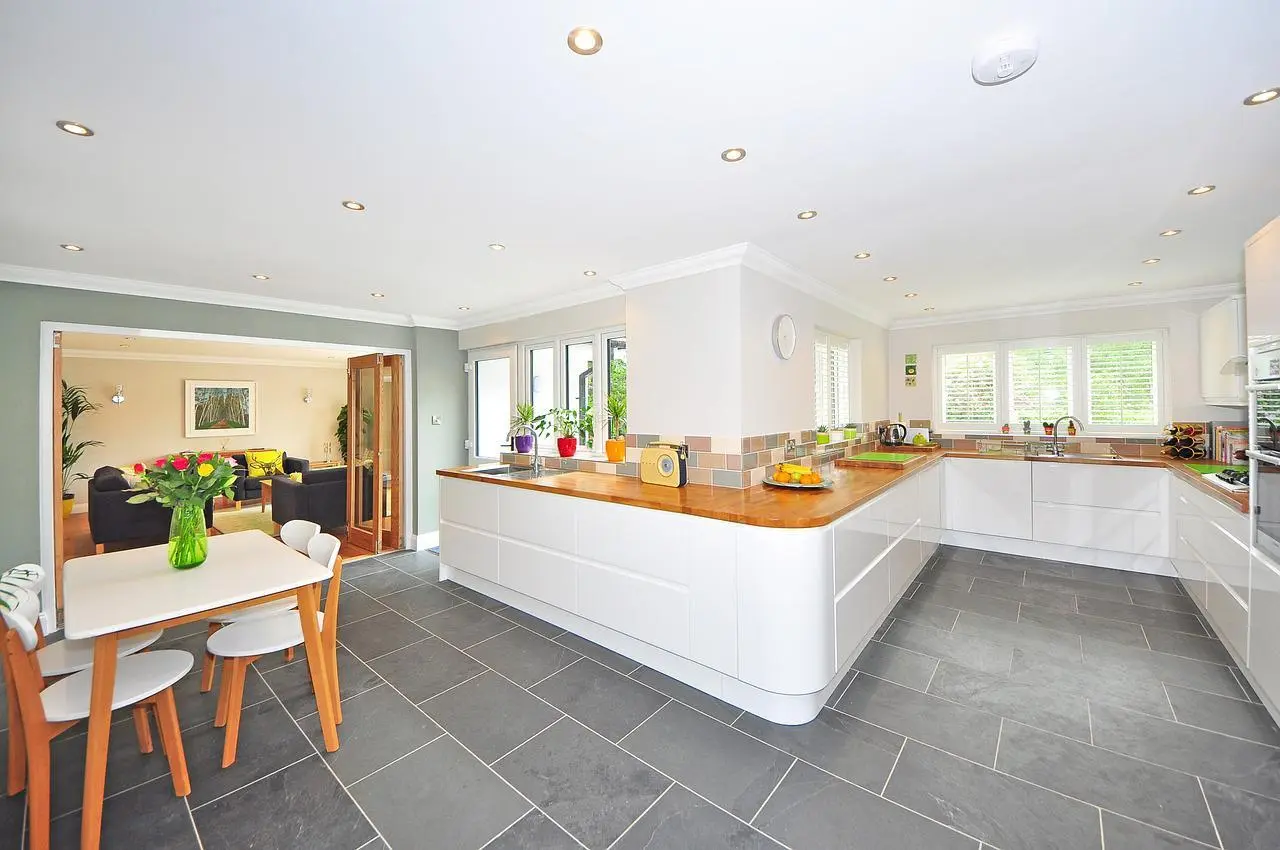
Ceramic tile is a practical choice for both the floor and the walls of a kitchen. It comes in a wide range of colors, textures and patterns, so it can follow the style of the kitchen or add a bright accent. Plain gray vinyl tiles are no longer the only option: with ceramic tile, a kitchen can become a modern room, for example with a white tiled floor.
The material itself gives you:
- durability;
- strength;
- hygiene;
- fire resistance and moisture resistance;
- an affordable price.
Ceramic tile also keeps its look over time, where a wooden floor wears. It is easy to clean and it resists chemicals.
Check the label before the pattern
Do not choose a tile only because it fits the interior. A beautiful pattern does not help if the tile cracks under a dropped pan or wears through where people walk every day. Nobody wants to live with worn, cracked tiles after a renovation. This applies to a stone-look tile too: quality comes first, the look second.
So start with the technical data. A consultant in the store can explain it, but you can also read it yourself from the icons on the box.
The floor takes more impact than any other surface in the kitchen, and it is in regular contact with water. Do not choose a porous tile that absorbs moisture. On the other hand, the floor gets less heat and light than the walls and the worktop. A good ceramic floor tile for a kitchen must pass the three checks below.
What is the PEI rating for tile, and which class does a kitchen need?
The PEI rating shows how well a tile resists wear, from class I to class V. For a kitchen floor, choose class IV or V. The class decides how long the floor will last. The classification is named after the institute that developed it, the Porcelain Enamel Institute, and manufacturers print it on the box:
- PEI I: walls only;
- PEI II: bathroom and bedroom floors, where you walk barefoot or in soft shoes;
- PEI III: most rooms, except the hallway;
- PEI IV: mainly hallways, corridors and stairs;
- PEI V: the highest wear resistance, for areas with heavy traffic.
Class IV–V fits a kitchen because you spend a lot of time there and move around a lot.
Does the tile survive cleaning products?
A kitchen floor is washed often, and usually with detergents. Choose tiles with high chemical resistance: they are marked with the letter A or AA. Lower resistance classes are not recommended for a kitchen floor.
Which non-slip kitchen floor tiles are safe on a wet floor?
Matte or textured tiles with a coefficient of friction of 0.75 are the safest choice. Some boxes use the R scale instead: look for R10 or R11.
A kitchen floor is often wet or has something spilled on it. That is why glazed tiles, polished tiles and polished porcelain are a poor choice here, even if they look good in the showroom.
Common mistake: choosing a glossy tile for its shine. On a wet kitchen floor, the shine means the surface has less grip.
How to choose kitchen floor tile color to match your furniture?
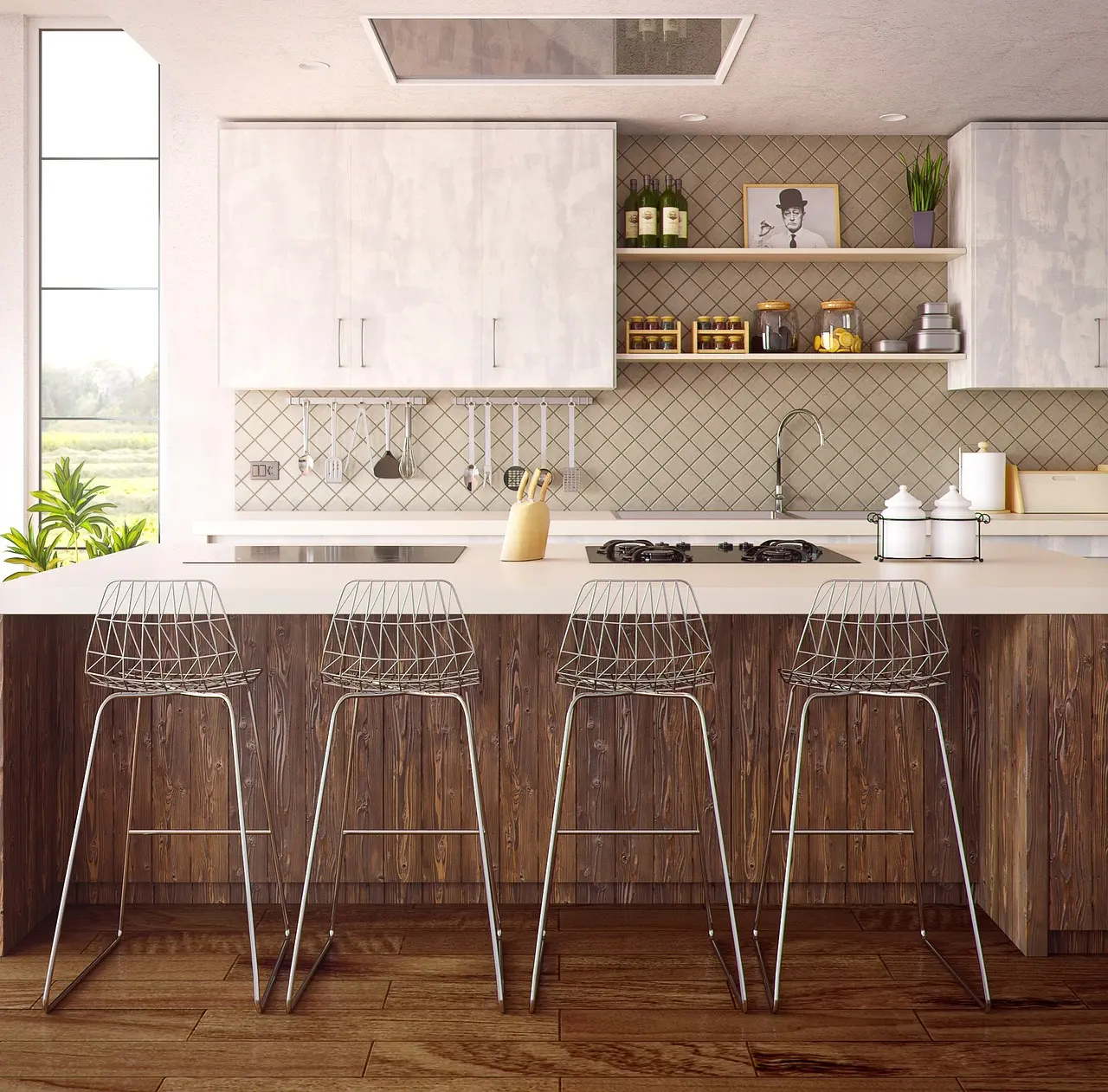
Pick a floor color from the same soft range as your furniture and walls, so that the contrast is not too sharp.
Some combinations that work:
- Green furniture: ochre, yellow, light brown or coffee tiles.
- Blue-and-white or white furniture: orange or sand tiles.
- Marsala furniture: vanilla, light beige or gray tiles.
- White furniture: almost any tile color.
With white furniture, look at the shade of the white. A cold white with a hint of blue goes with cold floor tones. A milky white goes with warm ones.
The floor also has to fit the whole kitchen, not only the furniture. Designers often advise taking floor and wall tiles from the same collection. In the end the choice is yours: color, style and pattern depend on what you like, as long as they agree with the rest of the room.
Which kitchen floor tile ideas suit a small kitchen?
In a small kitchen, use light tiles with a simple geometric pattern, or tiles in one color. Light shades make a room look bigger. Large patterns make it look smaller, and in a small room they make it feel narrow.
Bright and dark tiles work the other way: the room looks a little smaller, but also cozier. Pattern direction matters too. Tiles with vertical stripes make the kitchen walls look higher.
Two of these ideas can look equally good in a showroom and very different in your own kitchen. That is easier to judge on a plan than on a sample.
See the floor before the renovation starts
Draw your kitchen in Home Planner before the real renovation and try your kitchen floor tile ideas on it. Measure the room, create the 2D and 3D floor plan, furnish it with products from real brands, make visualizations, and look through ready-made layouts for the bedroom, bathroom, living room and other rooms.
Try it on your own project
Free room planner and interior design app