Pros and Cons of Tile Flooring in Bathroom: Color, Ceramic, Mosaic

Bathroom floor tile ideas that start with the trade-offs: what tile does well, what it costs you, and how to choose its color, type and pattern.
Sooner or later, almost every homeowner renovates a bathroom. And in almost every bathroom renovation, the floor ends up in tile. Designer catalogs show a very wide range: porcelain classics, terrazzo, unusual formats and bold patterns. Most of it comes at many price levels, so a large bathroom and a small one have the same choice.
Before you choose a pattern, it helps to know what you are choosing. Below are the pros and cons of tile flooring in bathroom renovations, then ideas for color, ceramic and mosaic.
What are the pros and cons of tile flooring?
Tile resists water, lasts for decades and is easy to clean. The price for that: it is harder to lay, it has joints, and it costs more than many other floors.
Cheaper floor materials exist, and new ones appear every year. Tile stays the most popular choice anyway. Here is why.
The pros:
- Water. No other common floor material resists moisture as well.
- Durability. It is a hard, high-quality material.
- Easy care. You can clean it with any household cleaner.
- Choice. It comes in many shapes, colors and sizes.
- Any style. It works in every design direction.
Modern tools and adhesives let a tile floor last for decades. With normal care, it does not fade in the light.
The cons:
- Laying it is harder than laying most other floors.
- It has seams and joints that you will see and clean.
- It costs more than many other materials. Because it lasts so long, the higher price pays back over the years.
For most bathrooms, the pros win. A tile floor means you renovate once and then leave the floor alone for a long time. Saving on the floor often means paying for it twice.
After you decide on tile, for example a modern stone-look tile, the next choices are the type of tile and the way to lay it.
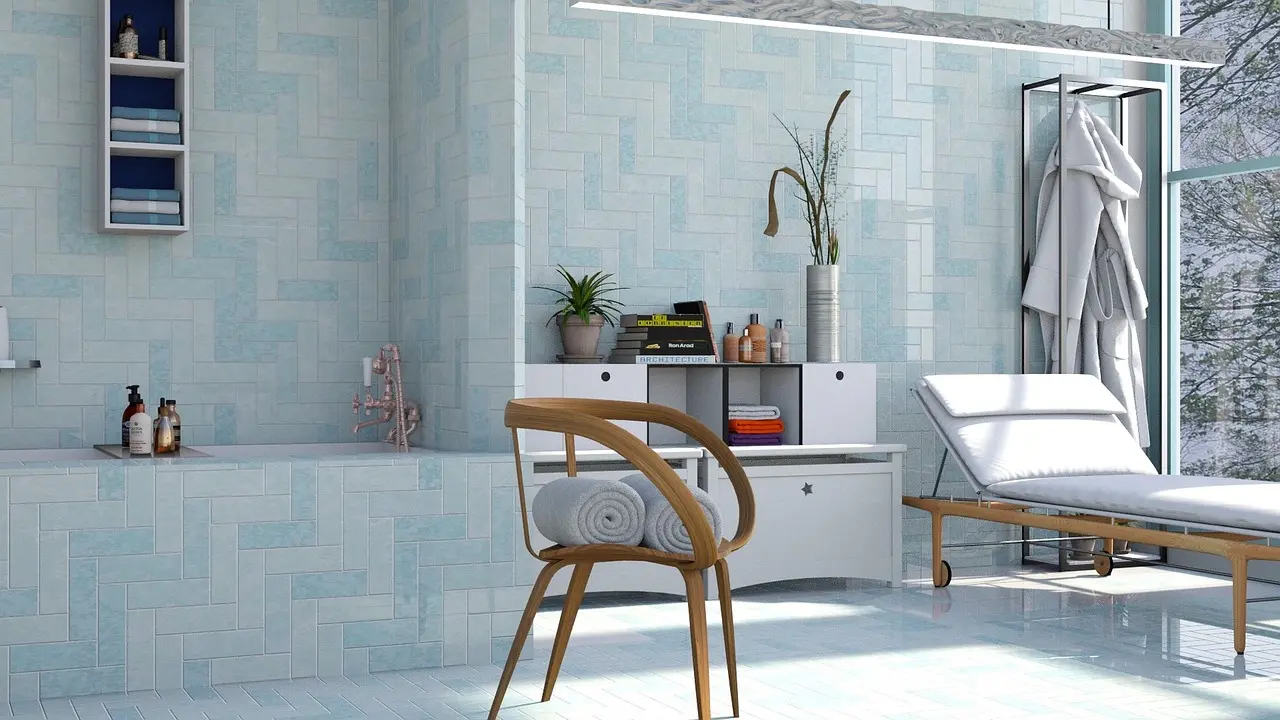
Mix types with a plan. A balanced bathroom can use three tile types: glazed tiles laid in a "parquet" pattern up to a border, simple square tiles on the rest of the floor, and neutral white hexagons on the walls.
Renovating a kitchen, a hall or a bedroom raises many questions about materials. The bathroom raises fewer: in most cases, people choose tile there.
What color tiles should you choose for a bathroom floor?
Choose by how you use the bathroom. Warm colors suit fast mornings and a quick shower; cool colors suit long, slow baths.
First, keep it simple. Many grout colors, ceiling colors, objects and styles in one small room need a professional hand to look right. One idea, done well, rarely needs a professional.
Match the color to your routine
Color affects mood and how you feel, and the bathroom is the room where you rest and get your energy back. So choose its color with care. You can keep it monochrome, a calm choice that lasts for years. If you like more risk, choose bright colors.
Fast routine: warm colors. Warm shades give energy and suit a shower. Your family takes a quick shower in the morning and goes out, and in the evening washes fast and goes to bed? Choose yellow, orange or even red tones.
Slow routine: cool colors. You take your time, and nothing replaces a warm bath for you? Choose cool shades for full rest: blue and green calm the nerves. Dark gray or black can also work. They help you switch off from the day.
Common mistake: choosing the color from a photo of someone else's bathroom. Choose it from your own routine first, then look for photos in that color.
Is ceramic tile good for bathroom floors?
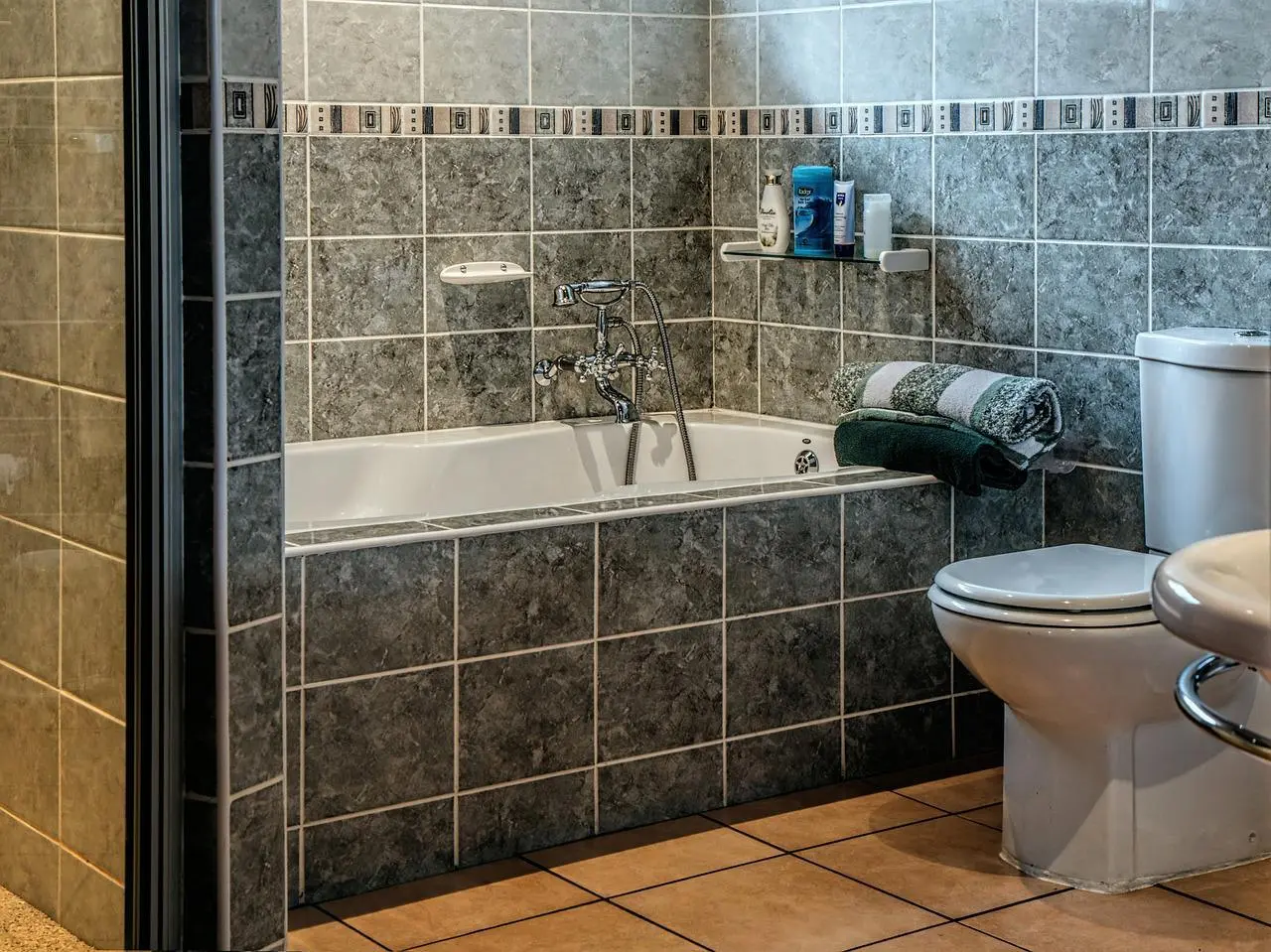
Yes. Ceramic tile suits any bathroom, small or large, and costs less than most alternatives.
It comes in many shapes and colors. Building stores carry ceramics in a wide range and at many prices, so every buyer and every style can find a match. It has several advantages and very few weak points, and its low cost covers most of those.
How to choose ceramic tile:
- Decide on the style of the whole bathroom first.
- Buy a protective product for the tiled surfaces. A bathroom is humid, and mold and fungus grow fast there.
- Plan the accessories and the plumbing together with the tile. One small detail in the wrong color can spoil the whole room.
- Decide if you want to change how big the room looks. Tiles laid vertically make the room look taller. Tiles laid horizontally make it look wider.
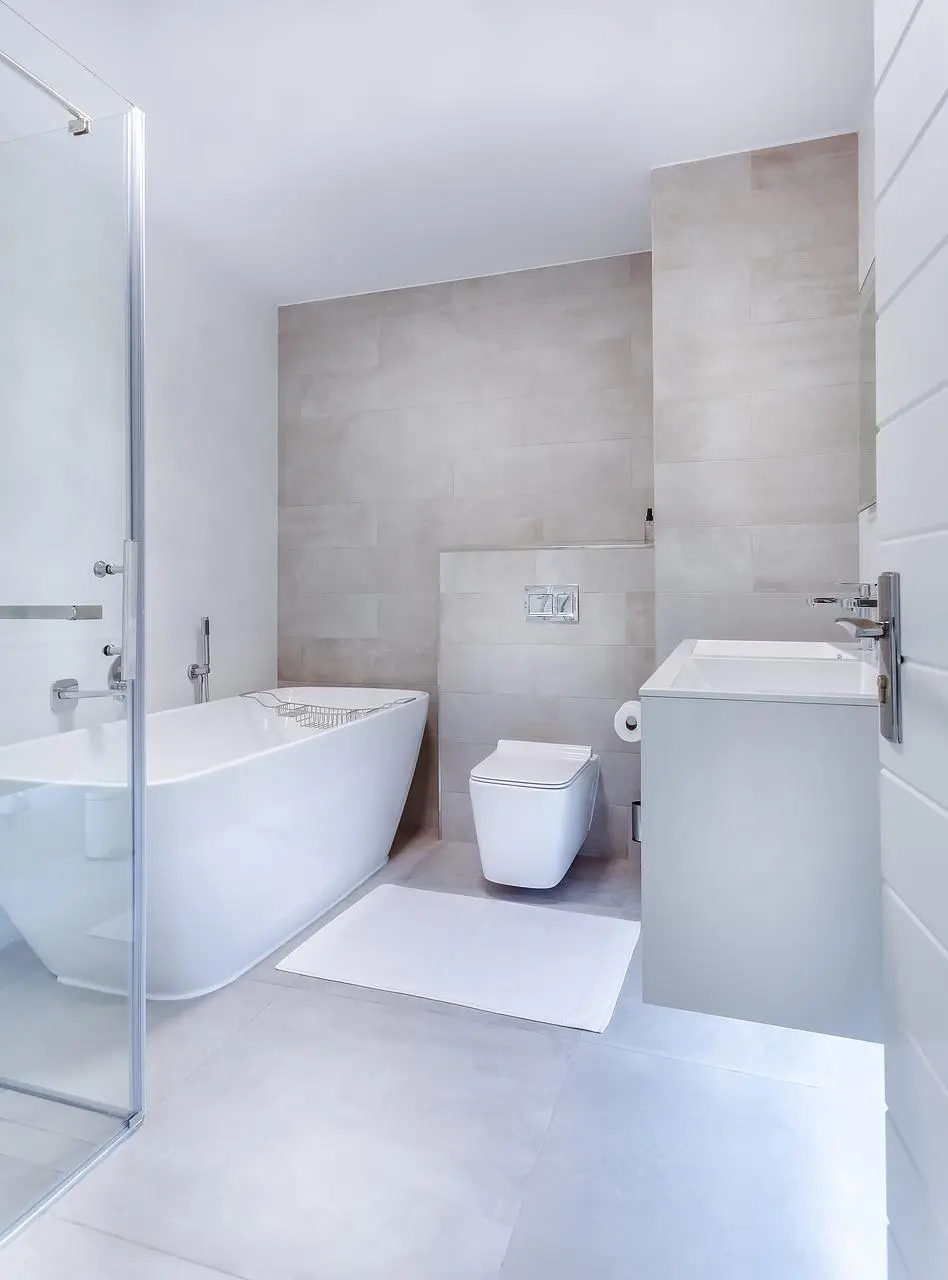
The minimal bathroom. A plain ceramic bathroom with few objects costs less than other options. It also looks light and spacious. It suits people who like minimalism and a tidy room.
The trade-off: some owners find it boring after a while. The fix is easy. Add color with towels in bright or iridescent colors, playful soap dishes, an unusual mirror, shelves or a cabinet.
When does a mosaic bathroom floor work?
Mosaic works when the surface is uneven or curved, or when you want a picture on the floor or wall. It keeps all the advantages of ceramic tile.
Remember the colorful puzzles from your childhood? Laying out mosaic tile feels much the same. Stores sell it in a very wide variety.
Mosaic resists water and is easy to clean, like ceramic tile. Its small pieces add more:
- they hide small unevenness in the walls;
- they cover niches and curved wall details well;
- they stick to almost any surface.
The main advantage is the picture. With mosaic, you can lay out a pattern or an image that no large tile can give you.
How do you choose the tile that is right for you?
Two rules help:
- Match your plans to the room. Not every tile that shines in the store looks good on your floor. A bold idea needs enough space.
- Choose quality. A cheap tile that you replace soon costs more than a good tile that you lay once.
Keep both rules in mind, and the bathroom floor will look good for decades.
Home Planner has tile textures for floors, among them classic, mosaic and hexagonal tiles. Try two of them on the bathroom floor of your own plan before you buy, and compare the result in 3D.
Try your tile ideas in Home Planner
Measure your space, draw your floor plan in 2D/3D, and furnish it with products from real brands. Create realistic images of your design, and get ideas from ready-made layouts for the bedroom, bathroom, living room and more.
Try it on your own project
Free room planner and interior design app