Geometric Patterns in Interior Design: Why They Work in Any Style

Where geometry already sits in your room, which styles and materials take it, and how a few patterned pieces refresh a room without a renovation.
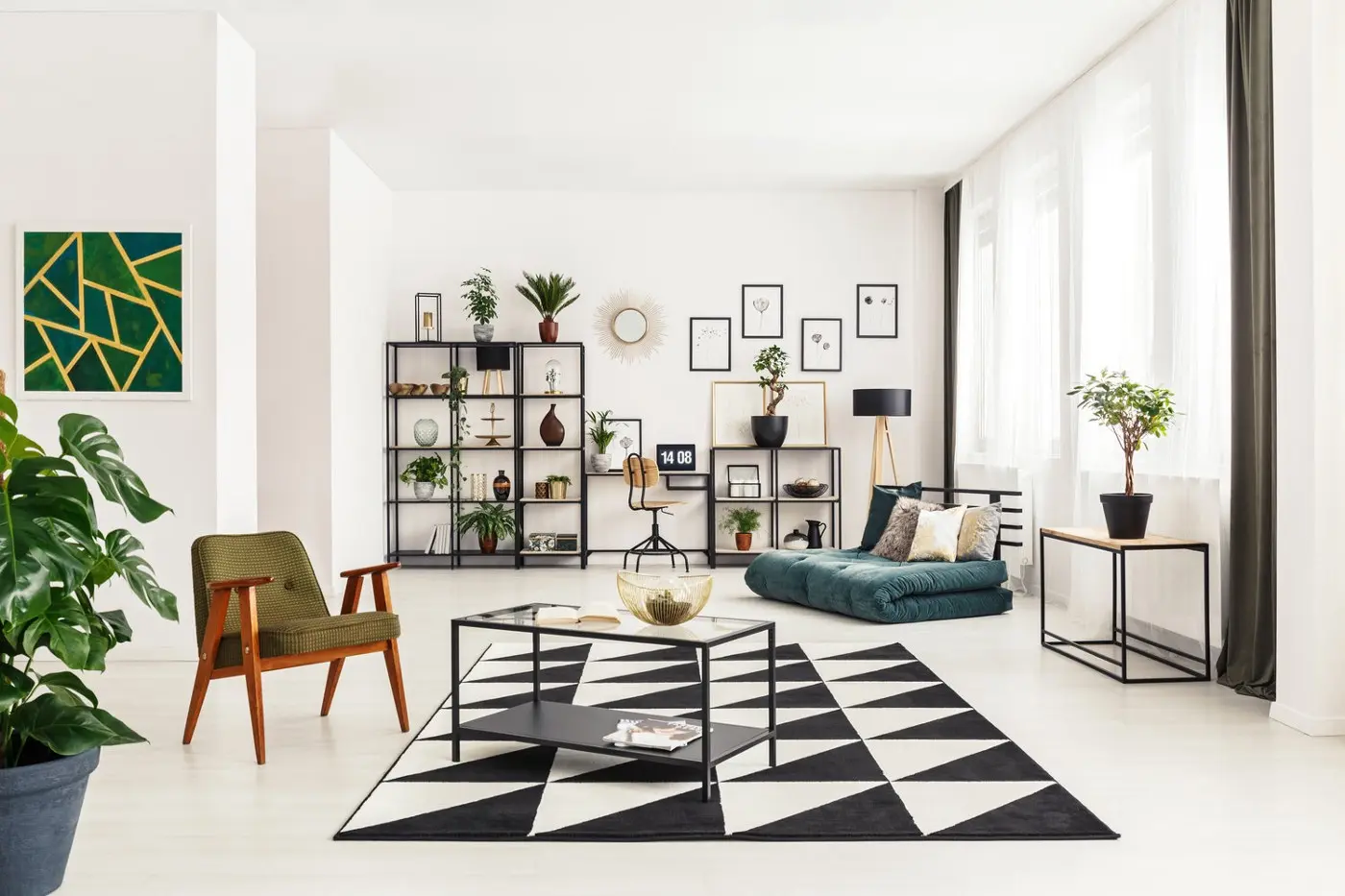
Look around the room you are in. The walls, the window, the bookcase, the rug: almost everything has a clear shape. Every interior has some basic geometry. The difference is whether you use it by accident or on purpose.
This guide is about using it on purpose. It shows where geometric patterns in interior design come from, which styles and materials they suit, and how to add them without starting a renovation.
What is geometric form in interior design?
It is the shape of the room itself and of everything in it. Without geometry there would be no houses or apartments: the walls, the ceiling and the floor form the first shape. The windows come next. They can be square, round or arched, but each one is still a geometric form.
You can work with geometry at three levels:
- The structure. Choose unusual shapes when the space is built or rebuilt, so the room is different from its base.
- The whole design. Build the interior entirely on strict geometric forms.
- The details. Add only decor and functional items with a clear shape.
A plain bookcase is already a geometric element. To make the shape visible, add contrast, or repeat the same shape on another surface or in another part of the room.
Common mistake: a shape that appears once looks like an accident. Repeat it at least once, and the room reads it as a design choice.
The same shape can look strict or bright. Colour and lighting decide which. This is why geometric patterns can make a room dull or impressive: the result depends on how you use them, not on the pattern itself.
Do geometric shapes in interior design only suit modern styles?
No. Geometric shapes in interior design do not make a room futuristic by default. A futuristic look comes only in certain styles, mostly minimalist and industrial. Shapes and patterns work in many other styles, classic included.
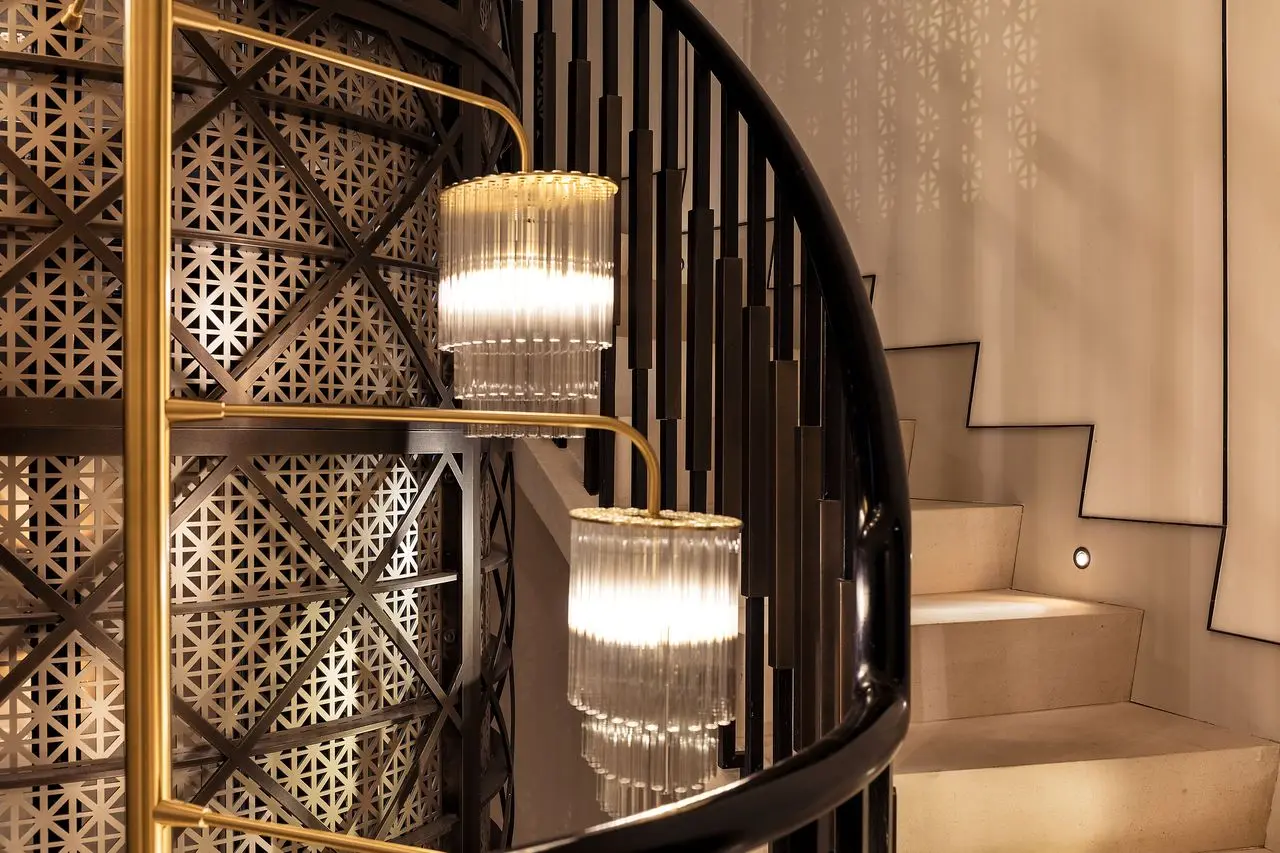
A classic element, a spiral staircase, gets a modern edge from lattice panels and glass pendants.
Rugs are the clearest example. Geometric rug patterns appear in both old and modern interiors. What changes is the choice of colours and the details that complete the pattern.
Why it works: a pattern is a tool for accents. You can use it on a large element, such as a floor or a whole wall, or on a small detail, such as a cushion.
Mix the materials, not only the shapes
Almost any material can carry a geometric form. Whether you renovate, refresh the design or only add decorations, you can use wood, plastic, glass, epoxy resin, paper or plasterboard.
This gives you a second tool: texture. A hexagon in wood and the same hexagon in glass look different. When you mix textures, the room stops looking monotonous. It stays one design, but it has more than one surface to look at.
How do you refresh a room with geometric home decor?
Change a few pieces, not the room. You can do something larger, such as painting the walls a new colour. Or you can replace only the accessories that are worn out. Geometric shapes work in both functional and decorative pieces:
- rugs,
- coffee tables,
- seats,
- flower pots,
- light fittings,
- statuettes,
- and similar items.
Because the choice is wide, you can replace one or two items and build a new combination. This also works in a home you only rent for a while.
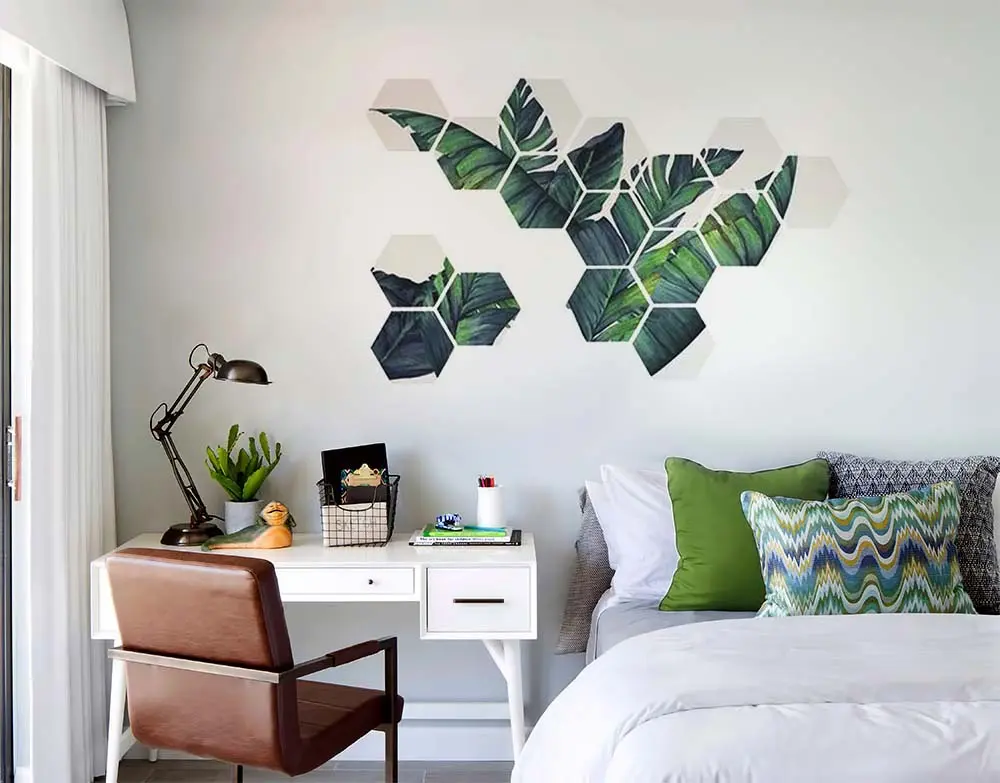
Hexagon tiles turn a plain wall above a desk into the main feature of the room.
Many geometric shapes are easy to make yourself, so the internet has many tutorials for DIY geometric decorations. A lot of these ideas are now common. Still, because the shapes are simple to make, you can change a familiar idea into something of your own. A small, handmade piece can finish a quiet interior at a very low effort.
Geometry adds order to a room
Clear shapes bring a sense of order. The effect is strongest when strict lines meet soft forms and textures. Another version: a pattern that looks chaotic from across the room shows a clear order when you come close. Pictures used as decoration often do this. You also see it on soft things: carpets, blankets and pillowcases.
Strict order on soft fabric sounds like a contradiction. That is the point. People like to mix contrasts now, so an interior that includes opposites feels current.
Ethnic motifs: an old pattern in a modern room
If you like a particular culture, its patterns are easy to bring into your interior. Some ethnic patterns use more squares and circles. Others use diamond shapes. Each tradition has its own rules.
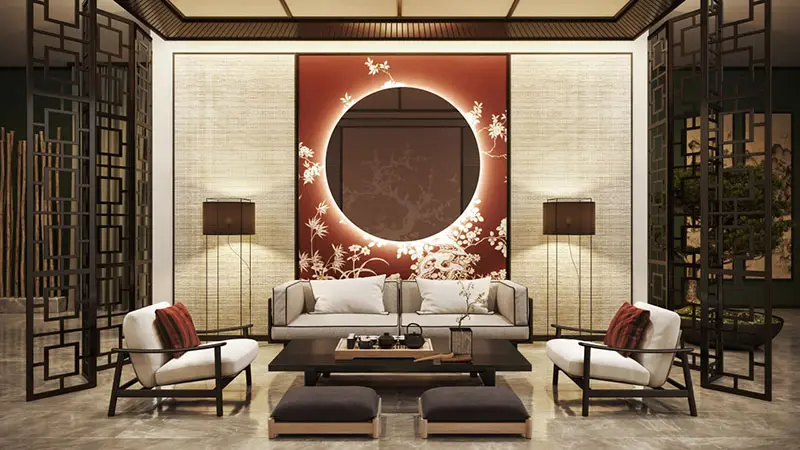
Lattice screens and a round backlit panel: one ethnic motif in two shapes, square and circle.
A good approach is to give a classic ethnic pattern a modern reading and combine it with a modern, mostly minimalist style. The room gets a futuristic touch, but it does not feel cold or sharp, so it stays comfortable to spend time in.
And if you make some of the pieces yourself, they will look good on Instagram too. Handmade decor gets a lot of attention there.
Test the pattern on your own plan first
There are many more reasons to like geometric shapes in a room. The ones above are a starting point. The hard part is to judge a pattern before you buy the rug or paint the wall, because a pattern that looks calm in a photo can feel busy in your own room.
So try it on your own plan. In the Home Planner App you measure your space, draw the room as a 2D/3D floor plan, and furnish it with products from well-known brands. Then create an image of the finished room, or start from ready-made layouts for a bedroom, a bathroom or a living room, and see how the shapes work in your own surroundings.
Trademark notice. Home Planner is not affiliated with, endorsed or sponsored by Meta Platforms, Inc.; their names and marks belong to their owners. Other trademarks are the property of their respective owners.
Try it on your own project
Free room planner and interior design app