How to Design a Kids Room: 3 Ideas for Zones, Colour and Furniture

Three ideas that shape a child's room: zones for sleep, study and play, a calm colour scheme, and safe furniture that grows with your child.
Your child will sleep, play, read, do homework and have friends over, all in one room. That is a lot of jobs for a few square metres. Before you buy anything, look at four things: the age of your child, whether it is a boy or a girl, the size of the room and its shape.
Then ask your child. One child wants a rainbow, another wants everything pink, a third wants a small house-shaped frame over the bed. The room must work for you, and your child must like it.
Here is how to design a kids room in three ideas: divide it into zones, choose a calm colour scheme, and pick furniture that is safe and grows with your child.
What are the main kids room design ideas?
Three ideas matter most: zones for rest, work and play, a calm colour scheme, and safe, multifunctional furniture. The style and the shape of the room decide how you apply them.
Divide the room into zones
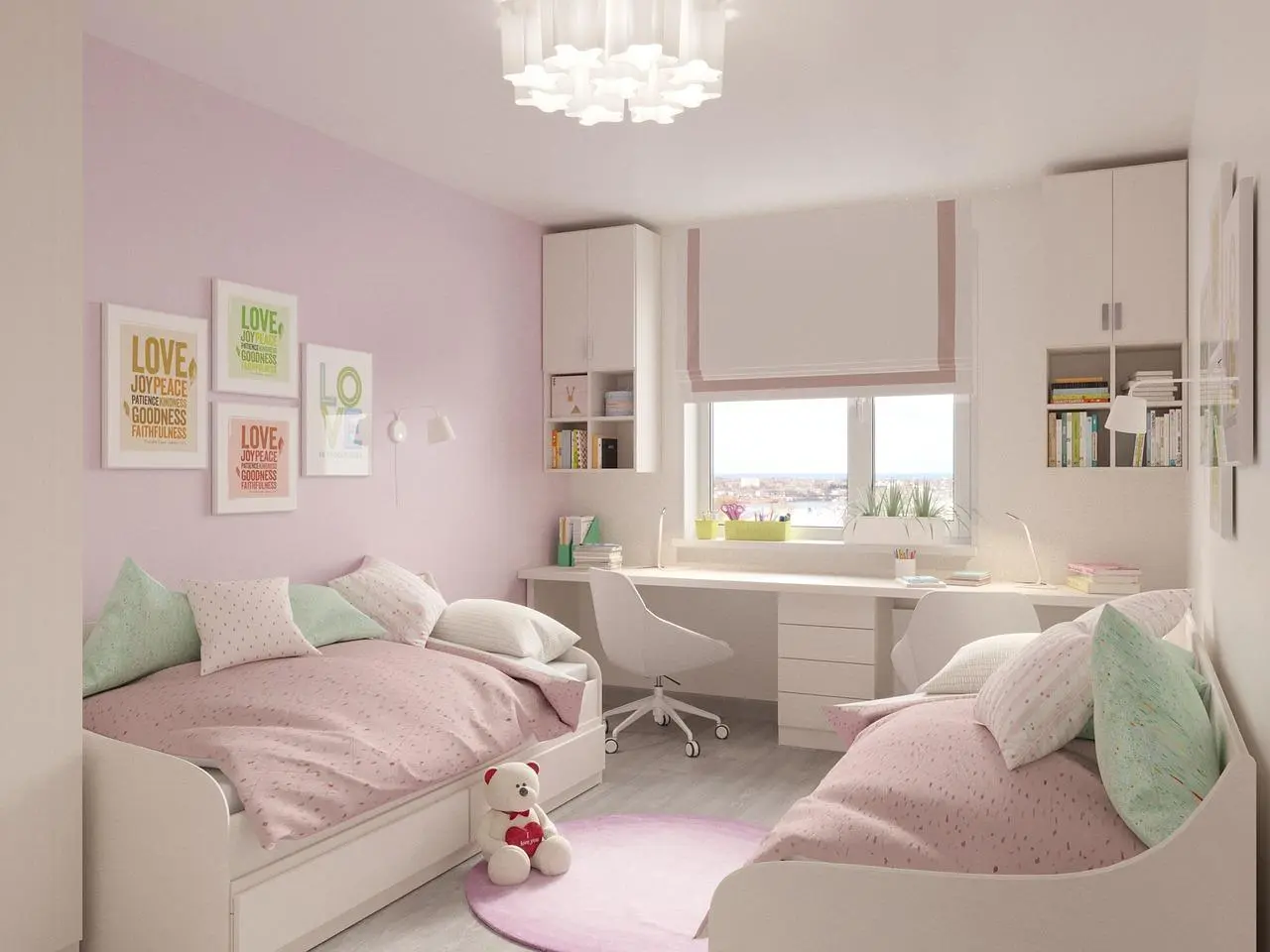
A child spends most of the day in this room. So it needs more than a place to sleep. Plan three zones:
- Rest: the bed, and a quiet corner to relax and read.
- Work: a table for homework and books.
- Play: space for toys, games and friends who come to visit.
Keep one corner neutral and clear. It gives the eye a place to rest and keeps the room from looking full.
Why it works: each activity has its own place, so toys do not end up on the homework table.
The trade-off: three zones take space. Compact furniture that does two jobs at once solves this, for example a bed with storage or a bunk bed with a desk below.
Choose a quiet style
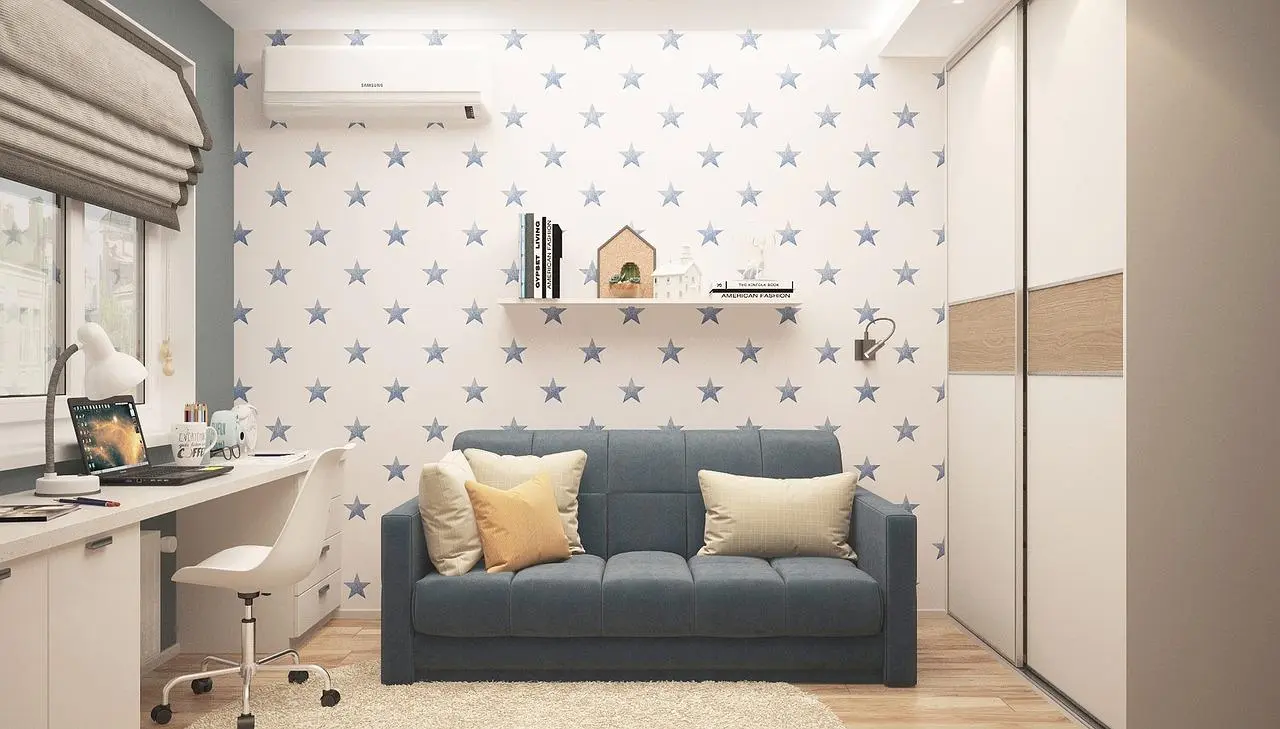
Trends such as a spotted pattern or a bright art wall are fine in small doses. For everyday comfort, choose furniture and accessories that do not demand attention. Soft lines, textures that are pleasant to the touch and practical furniture work in a room for a boy or a girl.
Fit the furniture to the shape of the room
Shops sell children's furniture for almost any room: a narrow one, an L-shaped one, a room with a simple built-in closet and a rail, or a spacious one. The shape decides which pieces fit, so start with the room, not with the catalogue.
Which kids room color ideas help a child sleep?
Calm, warm shades with one or two bright accessories. A room full of bright colours over-excites a child, and an over-excited child sleeps badly.
Why it works: calm walls let the child relax, and quality rest needs that. The bright accessories keep the room from looking dull.
The trade-off: a calm room can look plain at first. Think about how active your child is, and whether the room has to last a year or more before the next update. A calm base with bright accents stays fresh for that long without looking pretentious.
Common mistake: bright, colourful shades on every wall. They look fun on the first day. Later they can irritate the child and make it hard to fall asleep.
Which kids room furniture ideas keep a child safe?
Furniture without sharp corners, glass or fragile parts, with a safety certificate. Open shelves are one safe choice.
Safety comes first, also at home. Leave these out of a child's room:
- sharp corners;
- glass;
- brittle plastic;
- other fragile items;
- anything that can injure a child.
Check that each item meets the accepted quality and safety standards for its type. Only a certificate confirms this.
A children's room needs many kinds of furniture: a bed, a table, chairs, a wardrobe, a chest of drawers and shelves. Choose multifunctional pieces, so that the room does not get cluttered.
The bed: high sides first, then features
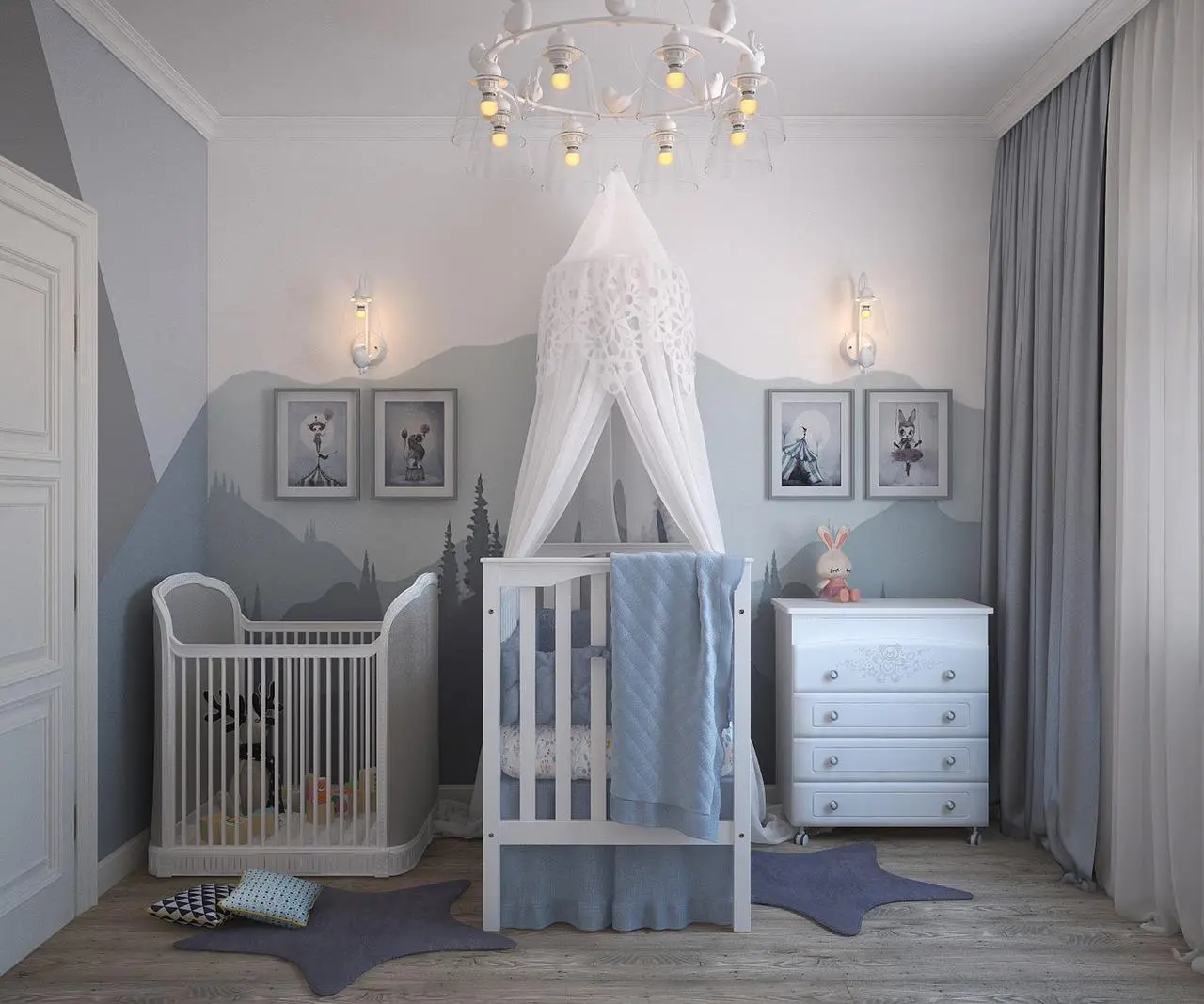
For a baby who grows fast, safety is the main criterion. The bed needs high sides, so that the child cannot fall out. The classic version has sides made of bars.
Then look at the features:
- A pendulum mechanism, if your child likes to swing.
- A built-in chest of drawers, to keep the things you need at hand.
- A transformer bed for primary school age. It "grows" with the child.
- A two-tier bed. The lower part is for study, storage and games, the upper part is for sleep. These models have shelves, drawers of different sizes and a table, so they use the space well, even in a small room.
For a teenager, the bed must also look good. Appearance, convenience and practicality count equally.
Wardrobe, chest of drawers and shelves
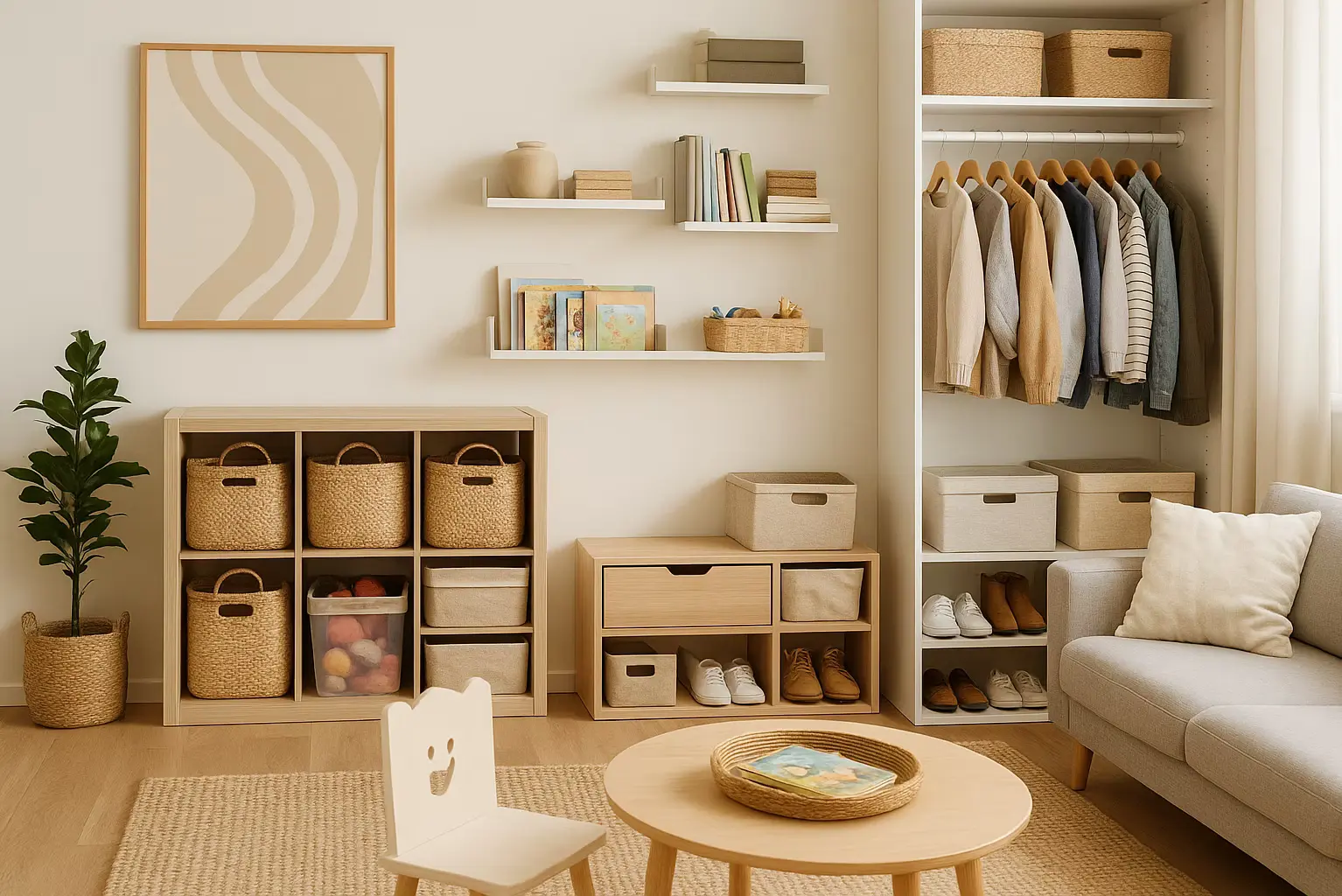
Modern storage furniture is compact, reliable and functional. Choose pieces with shelves and compartments of different sizes. They hold many kinds of things and make order easy to keep.
For a modern style, bright colours and unusual shapes are fine. The rule stays the same: no sharp corners and no glass.
Wood, MDF or particleboard?
Wood is the strongest material for children's furniture. Oak, beech and cedar are the most expensive. Pine, ash and birch cost less.
MDF and particleboard are more affordable. They are somewhat less strong than wood. If the maker follows the accepted standards, they are reliable too.
What does a kids room design with a study table need?
A table and a chair that match the child's height, with drawers and shelves for school supplies. Expect to change the table as the child grows.
The study table will probably change several times, because your child grows. At each age, the height of the table and the chair must match the height of the child. If they do not, spine problems are hard to avoid.
For a functional room, choose a modern table with drawers and book shelves, so that school supplies have their own place.
Your child lives in the room, not the experts
Listen to expert advice, but remember who the room is for. It must be comfortable and cozy for your child, so take their tastes and preferences into account. The furniture must suit the room, and your child must like it too.
That is easier to check before the renovation than after it. Try it on your own plan in Home Planner: measure the room, draw it as a 2D and 3D floor plan, and furnish it with products from well-known brands. Move the zones around, try two colour schemes, and see the result as an image before you buy anything. Ready-made layouts for a bedroom, a bathroom, a living room and other rooms give you a starting point.
Try it on your own project
Free room planner and interior design app