Living Room Design Styles: Scandinavian, Loft and Classic

Three living room design styles, what each one needs and where it falls short, plus the trends they share: light, open space, fewer things and natural materials.
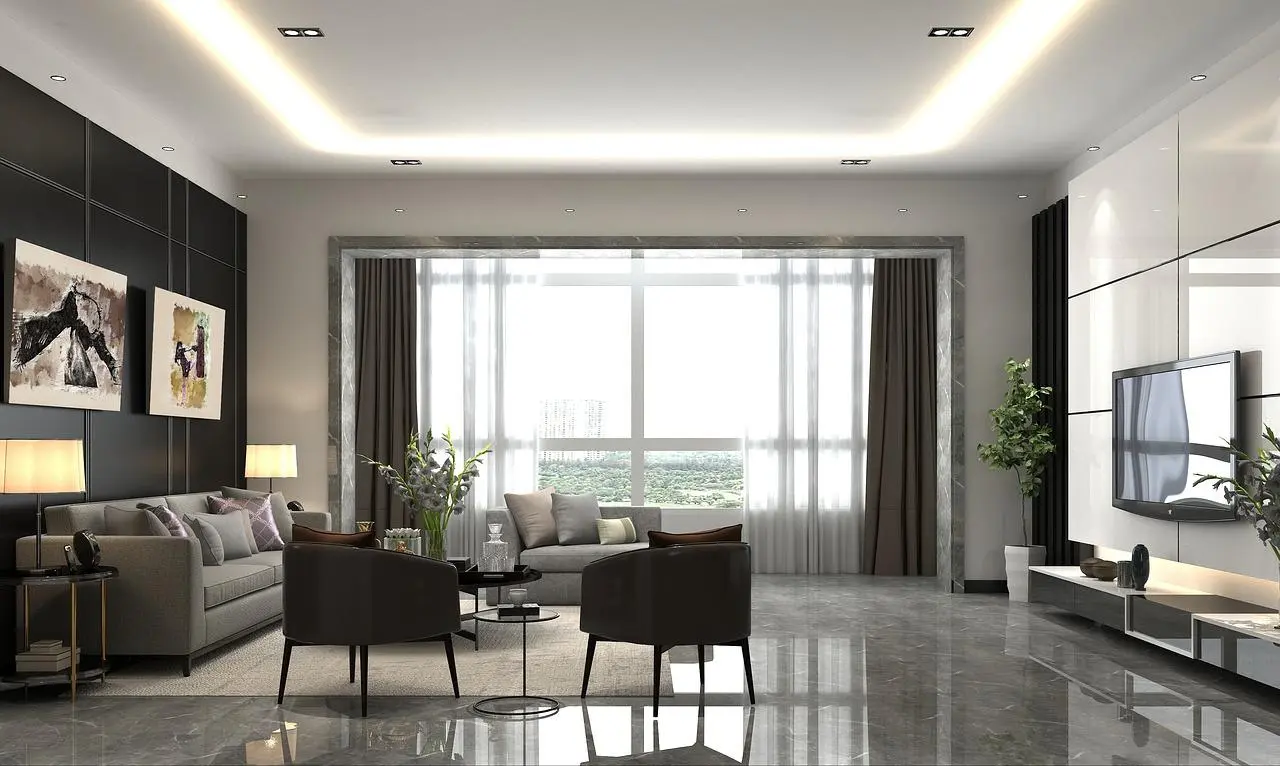
The living room is where the family ends the day on the sofa under a throw, and where guests sit when they visit. It is also the room most guests see first, so it says a lot about the whole home. Below are three living room design styles that have stayed popular for years: Scandinavian, loft and classic.
Choosing one is harder than it looks, because the living room rarely does one job. In a small apartment it is also the bedroom. If you work from home, it is also the office. In a studio, it is also the dining room. So start from what the room must do, and only then choose the style that fits it.
A small upgrade with a large effect: if you can spend a little more, neutral wallpaper from natural materials makes the room feel warmer in any of the three styles.
Which living room design trends do all styles share?
Five: lots of light, open space, minimalism, natural materials and light shades. Designers work in classic and in unusual styles, but most of them follow these five trends. Each one is a base that the styles below build on.
Lots of light. A modern living room gets a lot of natural light, often through a large or panoramic window. Why it works: daylight makes any style look clean and calm. The trade-off: you cannot add a window to every room, so plan good artificial light as well.
Open space. Screens and partitions have almost disappeared from living rooms, because an open room lets light and air move freely. In a small space, combine the living room with the kitchen. Studio apartments have been popular for many years for the same reason: one open room reads as a larger area.
Minimalism. A few decades ago, a living room held a large sofa, a fireplace, sideboards and cabinets for the TV and books, plus statuettes, art, large paintings and long, heavy curtains. Minimalism replaced this approach, and it has stayed one of the most common choices for a living room since then.
Natural materials. Choose as many items of natural wood and natural textiles as you can.
Light shades. Paint the ceiling and the walls in a light colour. Together with plenty of light, this makes the room look larger.
This light, calm base has one more advantage: bright accents look good on it. Cushions, a throw or a vase are easy to change when your mood changes, and the base stays the same.
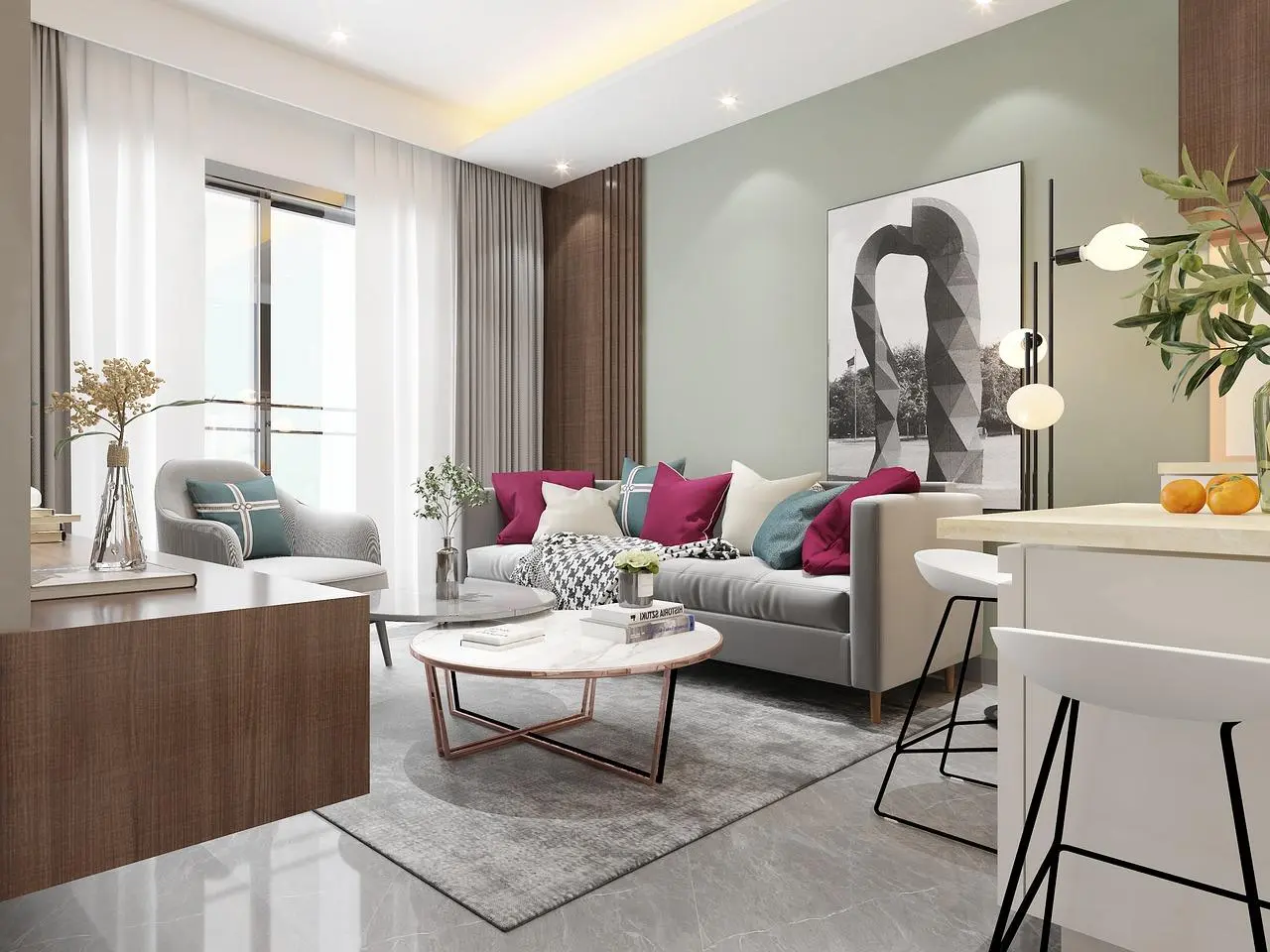
Grey sofa, sage green wall, pink cushions: the cushions carry the brightest colour, and they are the easiest part to change.
What are the different living room styles?
The three most popular are Scandinavian, loft and classic. Designers usually build a living room around one clear style, and there are enough styles that almost anyone finds one that feels like their own.
How to create a Scandinavian living room
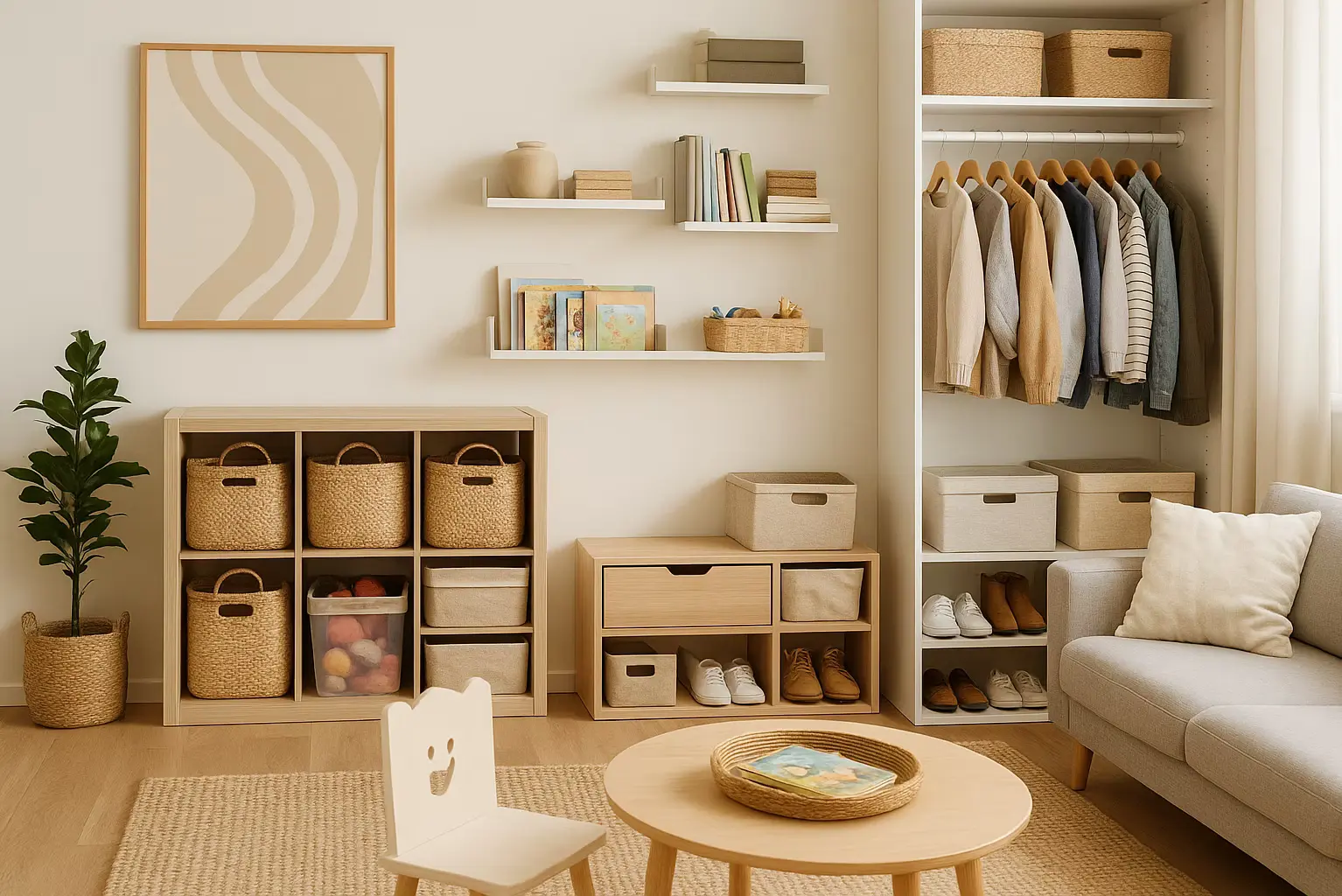
Scandinavian style is a common choice for a living room, and for good reason: most of its features match the trends above. To create it:
- Let the sunlight in. Do not cover the windows with thick curtains, and plan additional lighting for the evening.
- Keep the walls light.
- Use wood with a visible grain and shape, such as spruce.
- Decorate with textiles, posters and figurines.
- Add geometric and abstract patterns.
- Keep the space open. Do not fill the room with furniture: people must move easily from one room to the next.
- Choose natural materials for the finishes and the furniture, including upholstery from natural fabrics.
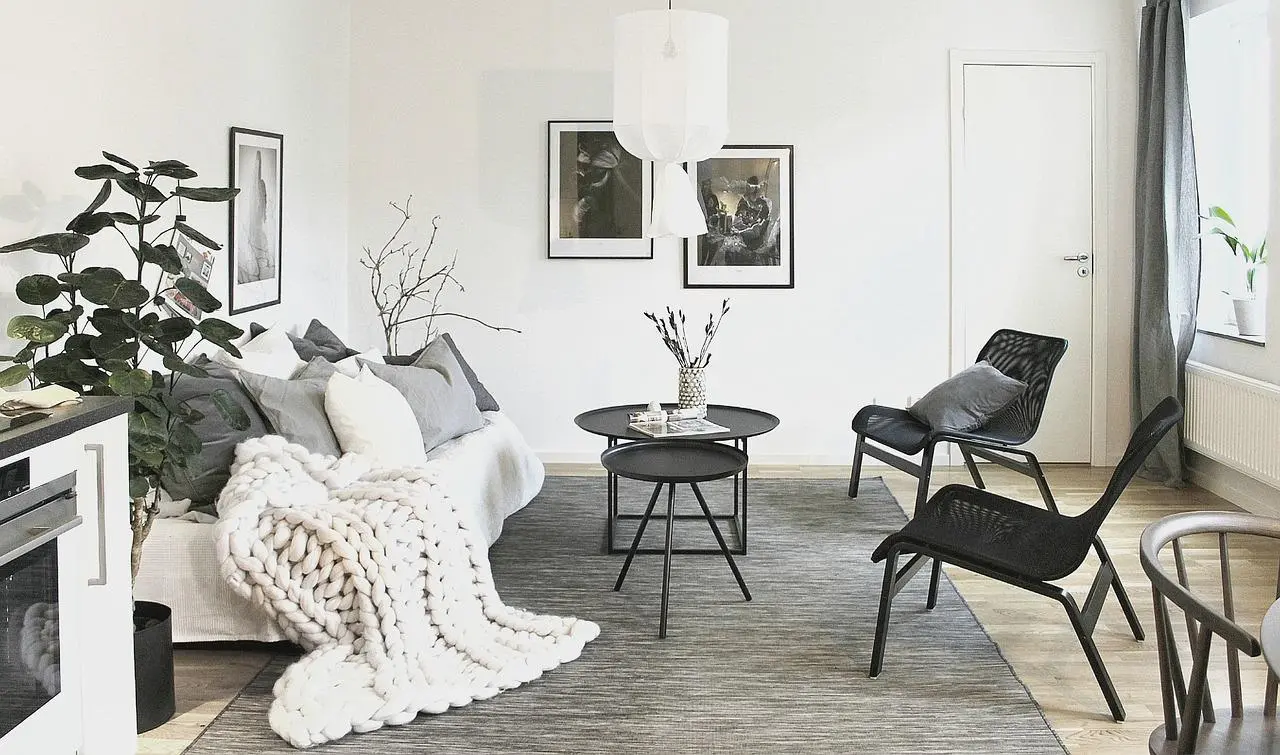
White sofa, knitted throw, black chairs: natural textiles and one dark contrast are enough for this style.
The result is a simple, clean room where the owners and their guests feel at ease.
Common mistake: adding too much furniture. Scandinavian style depends on open floor space, so one extra cabinet can make the room feel crowded.
Loft
Loft is the second most popular style of recent years. Its main tricks:
- Brickwork on one accent wall or on all walls. Both rough brick and an imitation, for example from plasterboard, are acceptable.
- Exposed wiring and pipes that become part of the decor.
- A minimum of furniture.
- Floodlights or lantern-style lamps.
- Natural materials: wooden logs, concrete floors and similar.
For a long time, people thought loft was too rough and too masculine for a home. Today it has proved that it suits many kinds of owners. The trade-off: brick, concrete and exposed pipes feel cold without warm textiles, so add them where you sit.
Do classic living room ideas work in a small room?
Yes, in small doses. The classic style fits large rooms best, but a small room can take a few rich elements without looking crowded. The main features of a modern classic living room:
- natural materials in the finishes and furniture: wood, linen, silk, glass;
- warm beige shades and gold tones, with accents in darker colours such as blue, emerald or burgundy;
- unusual, rich furniture and decor with stucco, carvings and glass inserts;
- a glass or crystal chandelier as the main light;
- a lot of textiles: heavy curtains, tablecloths, cushions on sofas and armchairs, carpets;
- floral patterns in ornaments.
In a small room, choose one or two of these features, for example the chandelier and the cushions, and keep the rest light.
How to choose your style
To decide on a style, study the information above, and also look at photos and videos of real projects. They give you ideas, and they also show how a style looks in a real room, which helps you choose.
You can design the living room yourself. The main decisions are the style and the colours. Start from what the room must do: receive guests, or also serve as a study, a play area or a bedroom. Then the result is not only stylish but also comfortable and practical.
Taste is easier to judge on your own room than on someone else's photo. In Home Planner, you can measure your space, draw it as a 2D and 3D plan, and furnish it with items from well-known brands. You can also create realistic images of the result and use ready-made layouts for the living room, bedroom, bathroom and more as a starting point. Try your style on your own plan, and change your ideas before the renovation starts.
Try it on your own project
Free room planner and interior design app