Modern Staircase Railing Ideas: Wood, Glass, Metal and Rope

Railing ideas for porch steps and indoor stairs: what each part does, how high a railing goes, and how wood, glass, metal and rope compare.
The stairs are in place, and the railing is the last open question. It has to hold a hand, stop a child and still fit the room. Here are modern staircase railing ideas for the porch and for the inside of the house, sorted by material.
A railing is more than decoration. It supports every person who walks up or down, so it decides how safe the stairs feel. Railings come in many shapes and materials. One modern look is a floating staircase with a black and white railing. Once you know the parts and the materials, the choice is easier.
Which porch stair railing ideas last outdoors?
Wood, metal and PVC all work outside. Choose by the facade of the house and by how much care you can give the material.
The porch railing is the first thing owners and guests see before they enter a country house or a private home. It must look good, but its main job is practical: it supports the person who walks up the steps.
Height. A porch railing is traditionally up to 90 cm high. At this height a person of medium height can hold it safely and comfortably.
Wood looks solid, but it needs extra work. Outside, it must be protected from moisture and insects, so it is treated with stain and varnish.
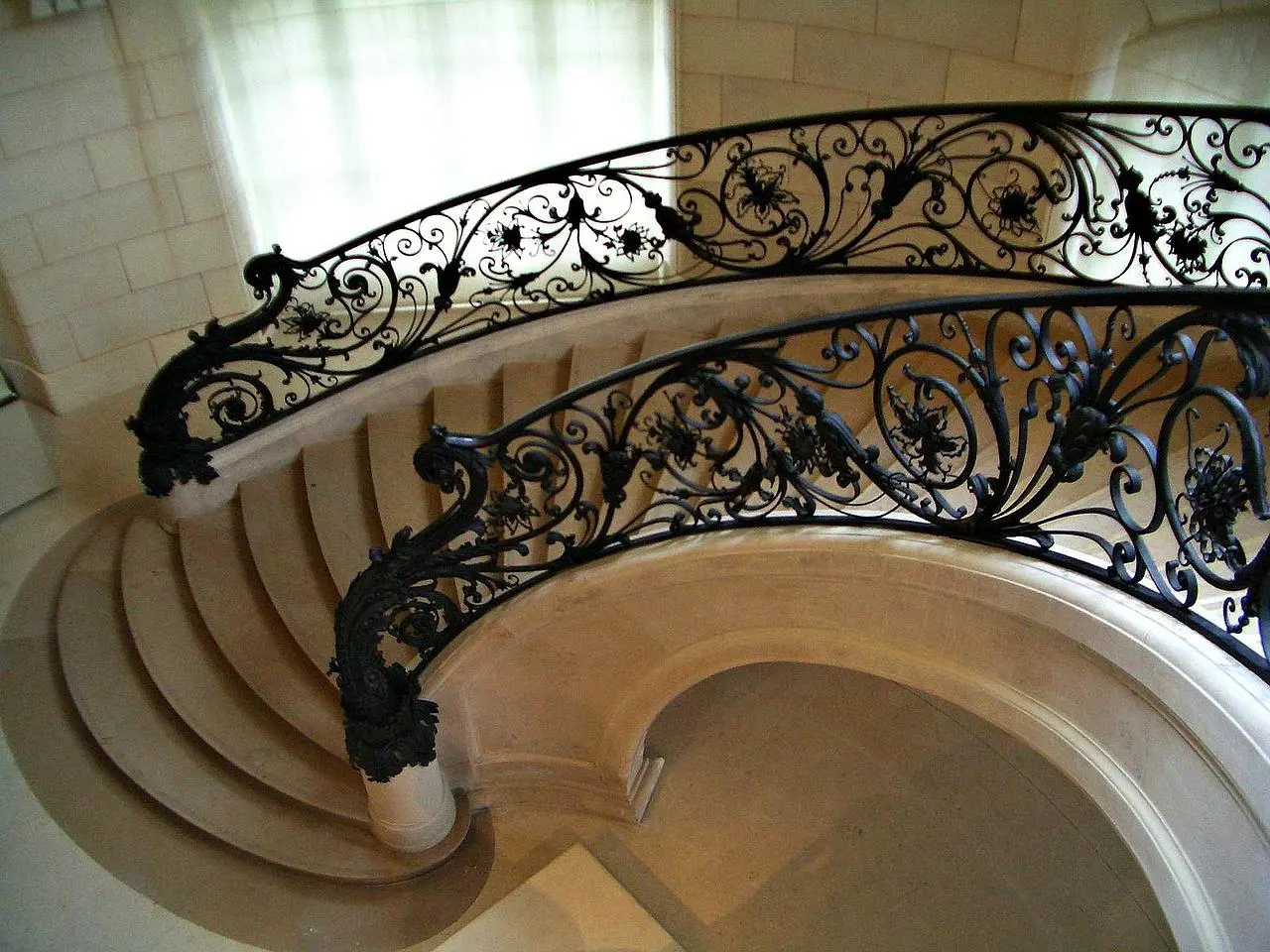
Metal looks modern, especially in curved designs. Wrought iron railings are the ones guests remember.
PVC (polyvinyl chloride) has become popular recently. It is affordable, durable and comes in many types.
Common mistake: choosing a porch railing on its own. Choose it to match the design of the facade.
Staircase railing parts: what does each one do?
A railing has balusters, sub-balusters, support columns, a handrail and brackets. Each part has its own job.
- Support columns (posts). They carry the railing. Indoors, they stand at the start and the end of the flight.
- Handrail. It runs on top of the posts. This is the part your hand holds.
- Balusters and sub-balusters. They fill the run between the posts.
- Infill. It fills the space between the posts and the handrail: balusters, racks or inserts.
- Brackets. They attach the railing to the house.
On a porch under a canopy, you need all of these parts. Indoors, the infill is the part most people treat as optional.
How do indoor stair railing ideas differ?
The parts stay the same; the setting changes. An indoor railing suits a townhouse or an apartment, and it must sit well with the room around it.
Posts. Fix them at the start and the end of the flight, with 50–60 cm between them. On a landing where the stairs turn, add extra posts.
Handrail. It sets the look of the staircase, and the whole interior depends on it. Still, looks come second. Even the most unusual handrail has one job: to make walking on the stairs safe and easy. Besides the handrail on the posts, you can fix a second one to the wall, so you can hold on with both hands.
Infill. It is optional, with one exception: children in the house. Then install balusters or racks at short intervals. The infill can combine inserts of different materials.
Staircase railing materials
Railing makers offer a wide range of materials. Here is what each one gives you and what it costs you in care.
Wood stair railing ideas: which wood to choose?
Oak for a premium look, pine for a small budget, beech or larch for strength.
Wood is the most common material for interior railings, on straight stairs and spiral ones. It is easy to make and to work with, it fits any interior style, and it comes in a wide range of colours. It also combines well with other materials, which suits a modern interior. Its two clear advantages are that it is natural and that it looks good.
Posts, handrails and infill are made from these woods:
- Oak. Expensive, but the price matches the quality. Oak is reliable and practical and suits luxury interiors. It is porous, so it cannot be sanded fully smooth, and you see an unusual pattern on the surface.
- Beech. A strong wood that keeps the stairs safe. The trade-off: it absorbs moisture, so the finished railing is treated with special compounds.
- Pine. Inexpensive and easy to work. It has a pleasant smell and shows an original pattern on the surface.
- Larch. Siberian larch is used for its strength. Handrails, posts and balusters made of it are worth the price.
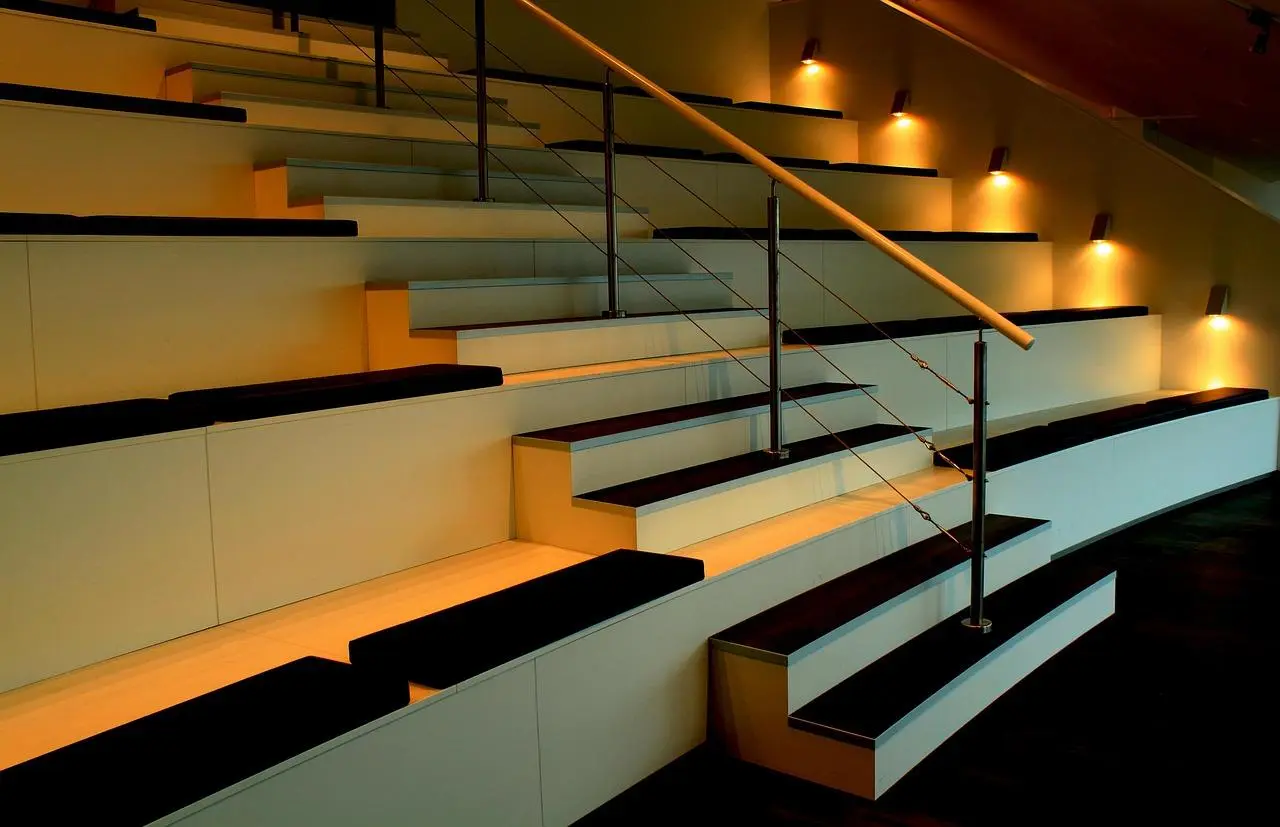
A wooden handrail on thin steel cables: wood where the hand touches, very little below it.
Glass stair railing ideas: is glass safe on stairs?
Yes, when it is multi-layer glass made for this job. Railings use these types of glass:
- frost-resistant;
- explosion-proof;
- bulletproof;
- sound-insulating;
- fire-resistant.
All of them are multi-layer glass, so fragility and broken railings are less of a worry. Glass makes a stairwell look airy and light. In a small apartment it also makes the room look bigger.
The trade-off is care. Wipe the glass often with a cloth and a cleaner, or it stops looking new.
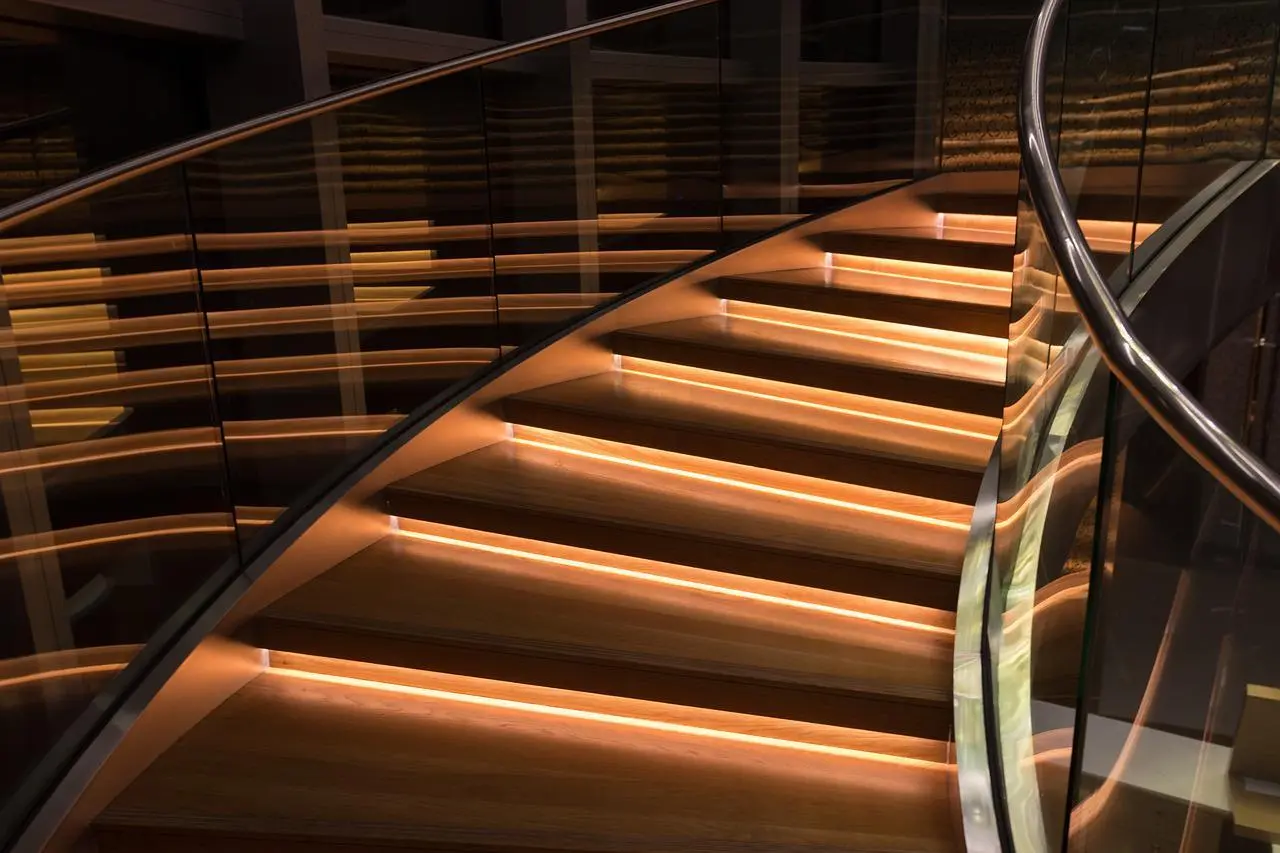
Glass panels and a slim steel handrail: the curve of the stairs stays in view.
Rope
A rope railing is a rope of medium thickness, stretched between several support posts and fixed to them. It works well on a long flight of stairs to the second floor. It suits a marine style, and interiors in an English or Scottish spirit.
In photos of rope railings, the eye goes to the posts: vertical wooden poles fixed along the flight and on the turning landings. You can build such a railing yourself to your own sizes, because the materials cost little. If you can, fasten a rope on both sides of the stairs.
Children or older people in the house? Add a handrail on the wall as well, so there is something to hold on both sides.
Try the railing on your own stairs first
You can build each of these railings with your own hands or order it from a specialist company. Either way, a railing adds comfort to the home and shows that the owner cares about details.
A railing is easier to judge on your own stairs than in a photo. Draw your stairs in Home Planner and try different kinds of railing on them before the work starts. In the same app you measure your space, make 2D and 3D floor plans, furnish rooms with items from world-famous brands and make visualizations of the result. Ready-made layouts for a bedroom, bathroom or living room help when you need a starting point.
Try it on your own project
Free room planner and interior design app