How to Layer Decor: Triangle, Layers and Mixed Heights

Three rules for a mantel, a shelf or an entry table: a triangle outline, a second layer, and mixed heights in one color palette.
Your shelf holds nice things, but they stand in a row like goods in a shop window. The pieces are fine. The arrangement is flat. Here is how to layer decor so the pieces read as one group, on a mantel, a shelf or an entry table.
What is layering in interior design?
Layering places decor at different depths and heights. Instead of one line of objects along the wall, you build a small group with a back, a front and a top. The eye moves through it, the way it moves through a room, and that is what makes a corner look cosy rather than arranged.
Three tips do most of the work:
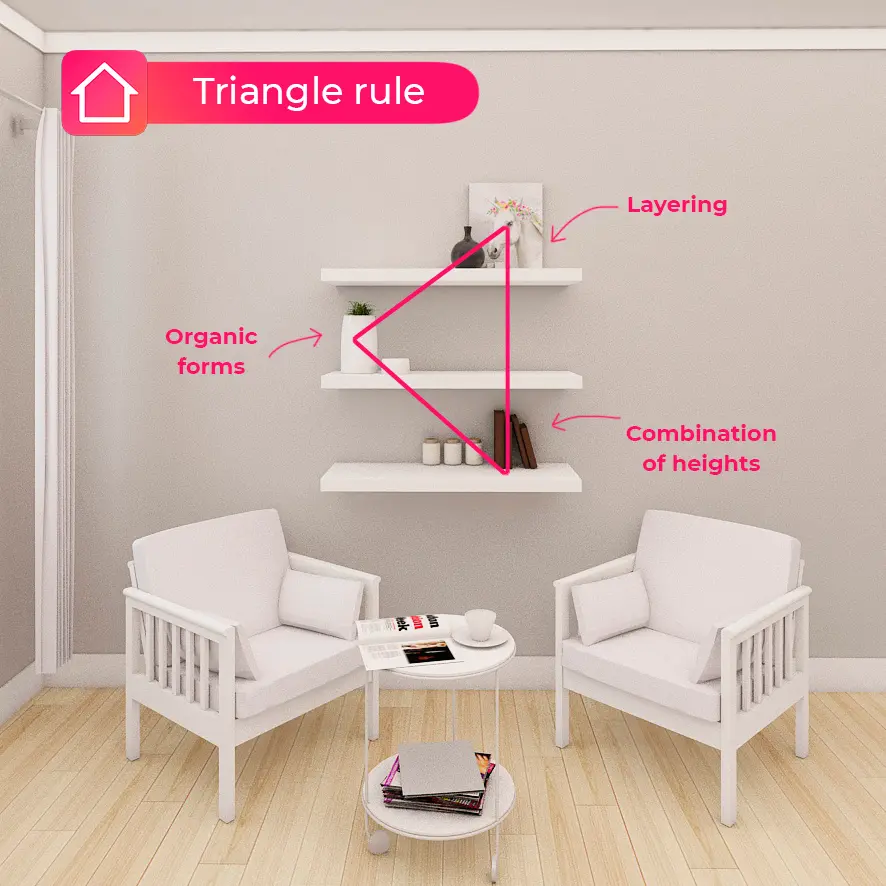
- Follow the triangle. Make the outline of the group a triangle.
- Add a second layer. Put a vase or a second picture in front of a picture.
- Mix heights, not colors. Combine tall and low pieces in similar colors or one color palette.
Tip 1: follow the triangle
Start with the tallest piece and let the rest step down from it. The outline of the group then forms a triangle: one high point, two lower sides. The high point can sit in the middle, which looks calm and formal, or near one end, which looks more relaxed.
Why it works: a triangle gives the eye a starting point at the top and a clear path down. A row of objects of the same height gives it nowhere to start.
Tip 2: add a second layer
Put something in front of the tallest piece, so that it covers part of it. A small frame in front of a large picture, or a vase in front of a mirror, adds depth on a shelf that is only a few centimetres deep.
The mistake to avoid: covering the important part. Let the front piece hide a corner of the picture, not its centre.
Tip 3: mix heights, not colors
Combine tall and low pieces, but keep them in similar colors or one color palette. Why it works: when the heights differ, the colours hold the group together. If both the heights and the colours differ, the group falls apart into single objects.
Materials can differ too. Wood, glass, paper and a plant in one palette give texture without noise.
How do you decorate a mantel with the triangle rule?
Arrange the pieces in a triangle: one high point, lower sides. Use a picture as the high point and a smaller piece in front as the second layer.
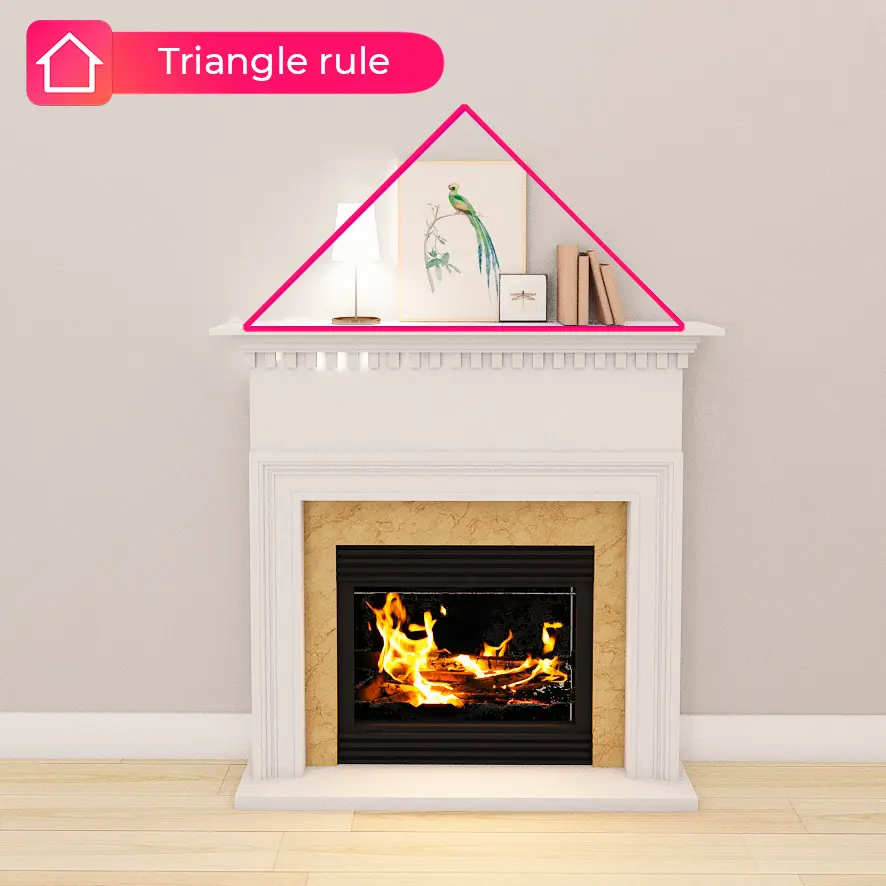
The large bird print is the top of the triangle. A small frame in front of it is the second layer, and a lamp and a stack of books form the lower sides.
Lean the picture against the wall instead of hanging it. Then you can move it when the season or your taste changes, and the mantel stays one layered group, not a frame on the wall above a row of objects.
Can decor be useful too?
Yes. On an entry table, the mirror, wall lights and baskets all do a job, and they still follow the same rules.
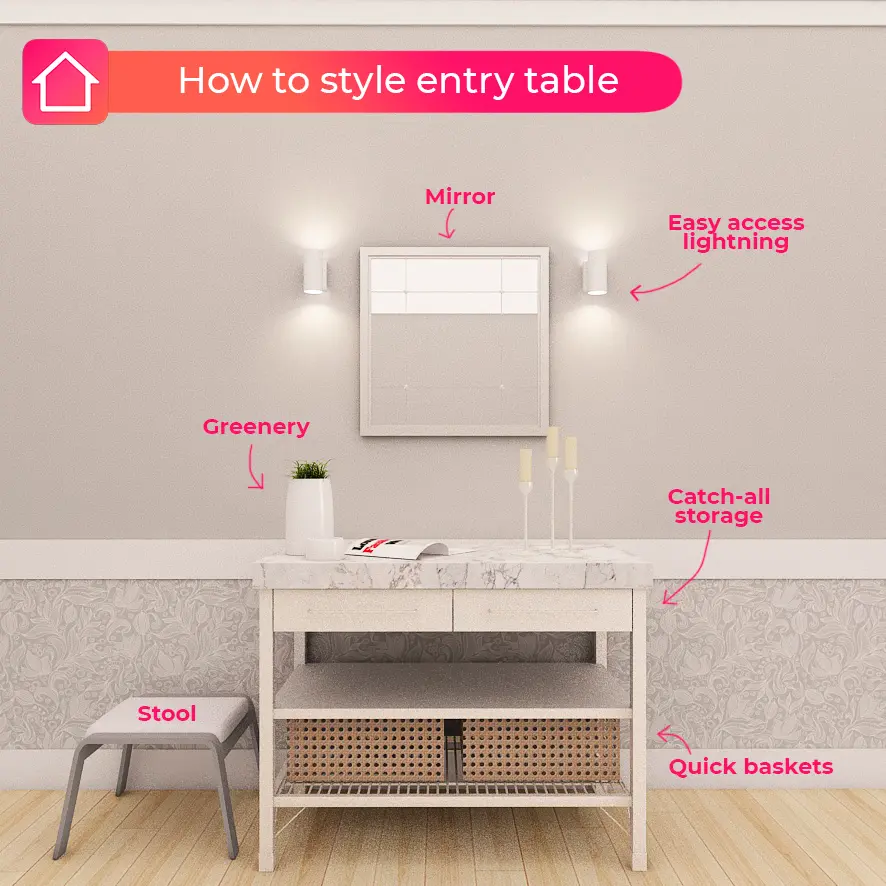
Each piece has a task: the mirror for a last look, the lights by the door, the baskets for keys and gloves, the stool for shoes.
The mirror is the high point, the two wall lights frame it, and the plant, the candles and the baskets are the lower layers. Useful pieces repeat every day, so choose them in the same palette as the rest of the decor.
Before you buy more: take everything off the shelf, then put back only the pieces that fit one palette. Layering decor often needs fewer objects, not more.
Home Planner has many decor elements and furniture from real stores. Measure your space, draw 2D/3D floor plans, furnish with world-famous brands, make visualizations, or start from ready-made layouts for a bedroom, bathroom or living room. Try it on your own plan first.
Try it on your own project
Free room planner and interior design app