How to Make a Small Living Room Look Bigger: 9 Ideas

Five space tricks and four styles that fit a small room: light, less decor, patterns, stripes and space-saving furniture, then classic, modern, Provence or loft.
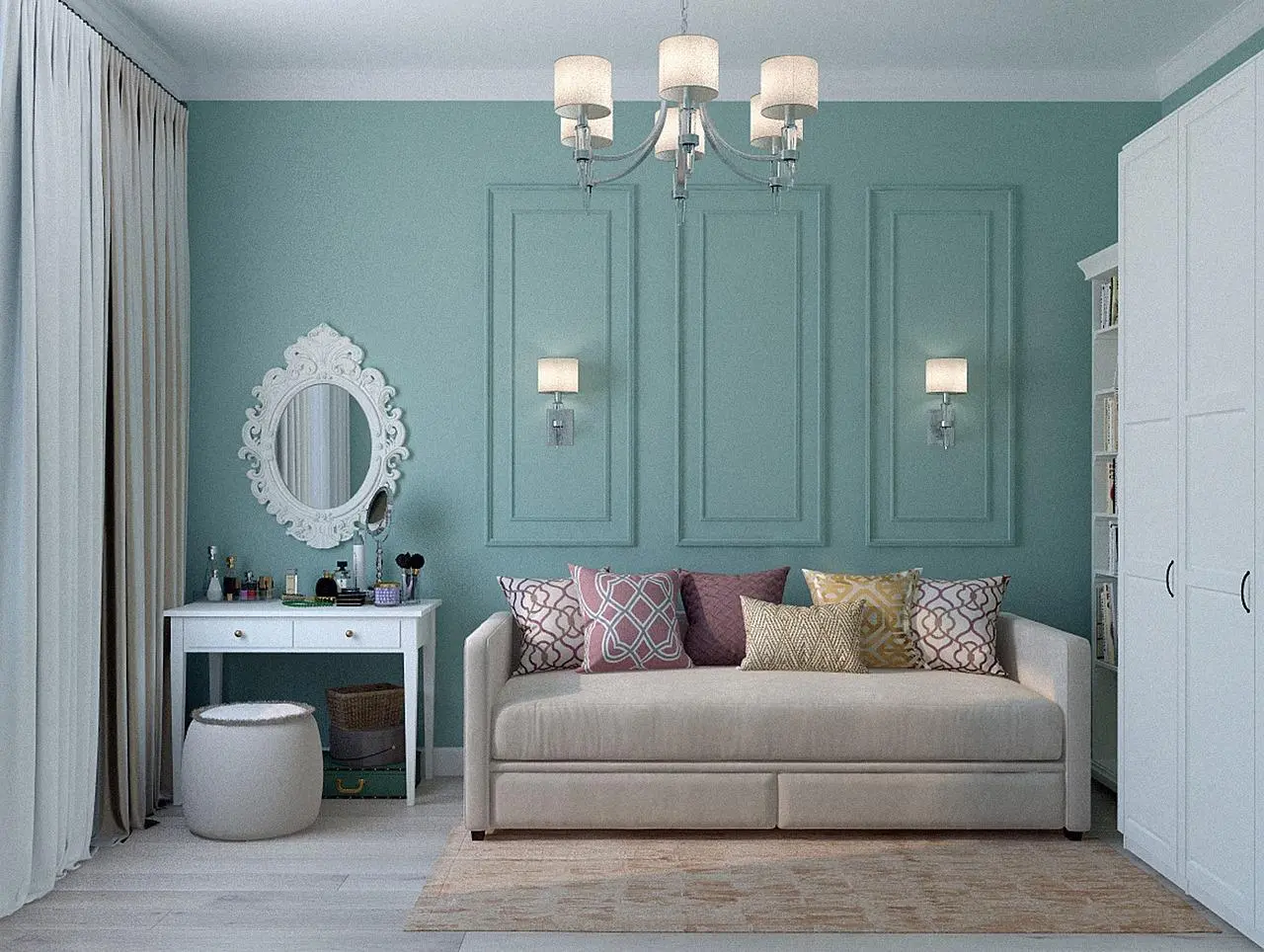
Your living room is 11 m². The sofa takes one wall, the TV takes the other, and the rest of the room has to work around them. Here is how to make a small living room look bigger without moving a wall.
The rule behind all of these small living room ideas: a small room is easy to overload. Every idea below either adds space you can see or removes something you do not need. The first five are tricks for any style. The last four are styles that fit a small room, and what each one asks of you.
Can you make a small living room look bigger with paint?
Yes, if the tones are light: light walls and light, natural materials hide where the room ends. Paint works best together with good light, less decor and compact furniture.
A small room does not limit your choice of colour, paint or decor. It limits how much of each you can use at once. Kept light and simple, even a small room can be cozy and comfortable for everyone who lives there.
1. Use many light sources, not one
A small living room needs several light sources, and artificial light is a must. One ceiling lamp leaves dark corners, and dark corners make a room feel smaller.
- Why it works: even light hides where the walls end.
- The trade-off: avoid sharp contrasts. Choose fixtures with smooth, simple lines.
What small living room decor ideas keep the room open?
The ones that remove things or make them smaller: bare walls, small patterns, low-contrast stripes and furniture that saves space.
2. Take the paintings and photos off the walls
In a living room of 15 m² or less, paintings and photographs make the walls busy. Choose light, natural materials for furniture and curtains instead.
- Why it works: an empty wall reads as more space.
- The trade-off: the room can look bare. The next idea fixes that.
3. Use a small pattern instead of decor
To give the room character without decor, use geometric patterns or abstract prints. The rule is simple: the smaller the print, the bigger the room looks.
4. Stretch the room with stripes
Stripes change how long or tall a room looks, so match them to its shape.
| Room shape | What to use |
|---|---|
| Long and narrow | Narrow vertical stripes on the walls |
| Square | Wallpaper with a wide horizontal stripe |
The mistake to avoid: high contrast. Strong contrast between neighbouring stripes makes the room look busy, so keep it low. Also check the ceiling: stripes can make it look higher or lower.
5. Choose furniture that saves space
Choose comfortable furniture that also saves space, such as pieces that fold or change shape.
- To divide the room into zones, do not use partitions or screens. They cut a small room in half.
- Glass and mirrored furniture work well.
- A mirror in the right place does two jobs: it makes the room look larger and it spreads the light.
Which small living room styles suit your room?
Almost any. Classic works best in rooms of 11 m² or less, if you keep it light.
When you renovate a flat or a house, you can decorate even a small living room in the style you like. The difference is what each style needs from you.
6. Classic: light and symmetrical
Classic style is the one most often recommended for a small living room, and it works with a TV too. Kept light, it looks elegant and neat without overloading the room.
- Colours: neutral, calm shades with no contrast.
- Materials: mostly natural. Modern technology still fits in.
- Light: crystal or glass chandeliers and wall lamps, with white light.
- Furniture: carved legs; doors in beige or ivory.
- Details: stucco, soft arches, ceilings with several levels.
- Walls: one wall can carry a work of art. It does not have to be a painting: a pattern painted by an artist over the full height of the wall works too.
Classic is the only style here that allows heavy curtains with drapes, tie-backs or ribbons. The rule that holds it together: everything is beautiful and symmetrical.
7. Modern: graphic and functional
Modern style is the opposite of classic. It uses graphic lines and practical materials, some of them artificial.
- The risk: a modern living room can start to look like an office, even when it is simple.
- The fix: soften it with cushions, rugs and throws.
- Furniture: flat appliances, even large ones, and furniture that changes shape.
8. Provence: soft and romantic
Provence is the next most popular style for small living rooms. It feels pastoral and French.
- Colours: peach, pink, beige and grey, on delicate furniture and decor.
- Textiles: lace trim on curtains and furniture, plant and flower motifs.
- Furniture: elegant chests of drawers, pieces on high legs, a fireplace with a bright front.
- Decor: vases and porcelain. Fresh flowers make the focal point, and flowers you get as a gift fit the style too.
Why it suits a small room: light colours open up the space and make it feel fresh.
9. Loft: open and almost empty
Loft style is used more and more in small living rooms, because it leaves the floor free. The room is not filled with furniture or storage.
- Furniture: a small sofa, a few soft poufs or bean bags, light open shelves.
- Black accents: use black in spots, mostly in decor: thin picture frames, wall clocks, floor lamps.
- Black gloss: it fits almost any modern small living room. A black gloss coffee table is an easy start.
How do you test an idea before you buy?
Draw your living room in Home Planner and try the idea on your own plan in 2D and 3D first.
All four styles work in a small living room. Which one is yours is a question of taste, and taste is easier to judge on your own room than on someone else's photo. See the result before you start the real change.
Measure your space, plan the room, and furnish it with real products from furniture brands. Make visualisations of the finished room, or start from ready-made layouts for a bedroom, a bathroom or a living room.
Try it on your own project
Free room planner and interior design app