Black and White Interior Design Ideas: Balance, Shades and Style

Use the 70-30 balance, softer shades and a style that fits, then decide how much black your room size and daily routine can take.
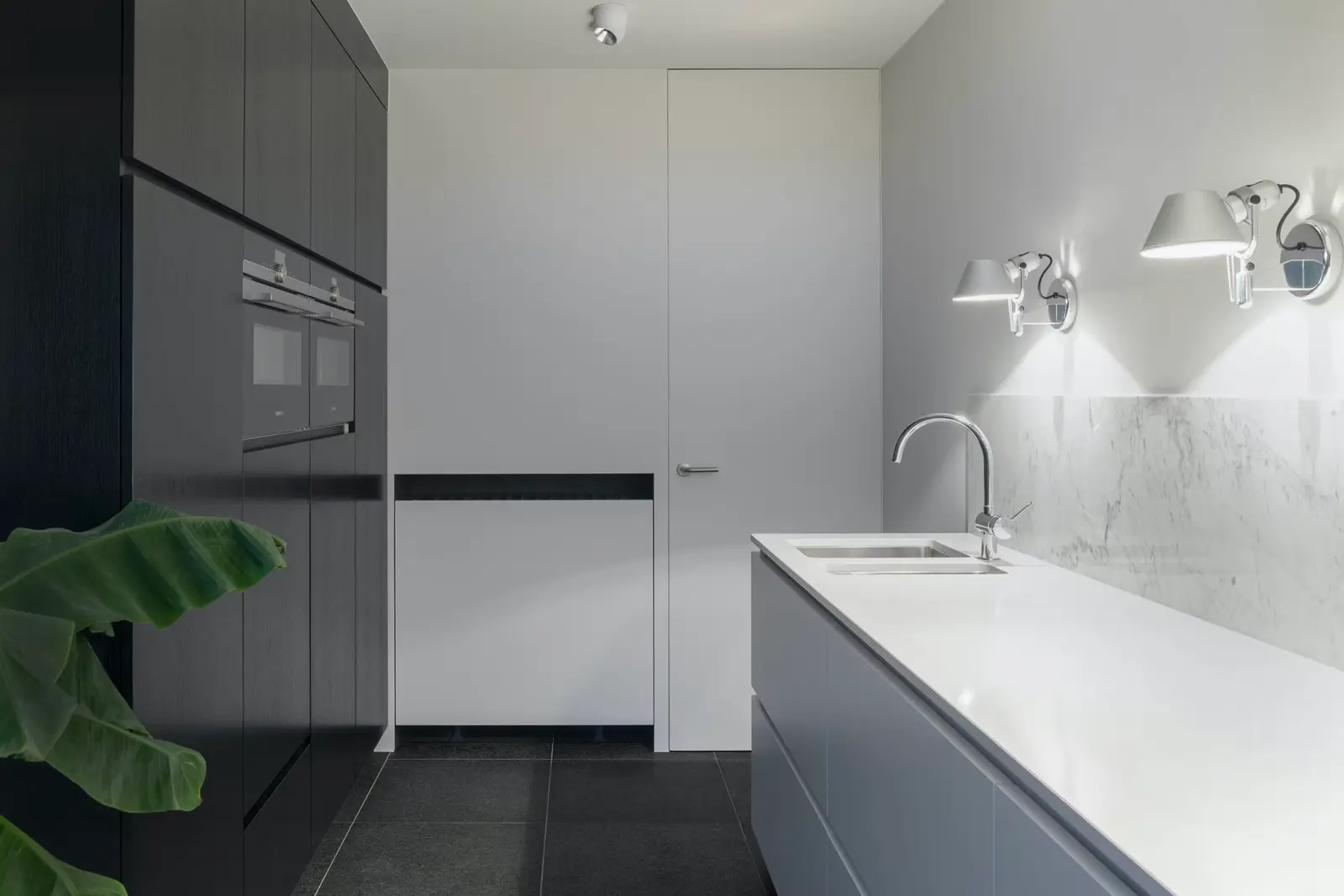
You want a black and white apartment, but two pictures stop you: a cold, empty room, or a floor that looks like a chessboard. Both are real risks. Both come from the same mistake: treating black and white as two equal colors. Below are black and white interior design ideas for any room, from the 70-30 balance to texture and contrast, plus the role each color plays.
What to decide before you paint
Black and white is a palette with nothing extra in it. The strong contrast between the two colors can turn an ordinary room into the place everyone looks at first.
The same contrast makes mistakes easy to see. Decide these five things before you buy paint or furniture.
Balance: 70-30, not 50-50
Balance matters in every room, and it matters more when the two colors are complete opposites. Do not try for an exact 50-50 split.
Use a 70-30 ratio instead: one color leads, the other supports. To choose which one leads, look at your lighting, the direction your windows face and the style of your decor.
Shades: you have more than two colors
Black and white do not have to be pure black and pure white. Each has many shades. Ask yourself whether full contrast suits your home. Often a set of shades that are closer together looks calmer.
White can move toward pearl, or toward tones of yellow and light pink. In place of plain black, try midnight blue or a deep slate grey.
Style: which styles fit and which clash
Black and white is minimal by nature, so it fits modern styles such as minimalist and Scandinavian. It clashes with bright, busy styles such as Vintage and Bohemian.
Look at the style of the rest of your home before you commit to a monochrome palette.
Black and white interior design for a small house: which color should lead?
In a small house, let white lead. Black makes a room look smaller, and the effect is strongest when the walls are black. White and other pale walls do the opposite: the room looks larger.
So decide which effect you want. Black makes a room feel cozier. White makes a very small room look bigger than it is.
Maintenance: white shows everything
White shows every small mark, so a white room takes more cleaning. Black hides dust and dirt. The trade-off: when you look closely, a black room may be less clean than it seems.
Choose the balance by how you use the room every day.
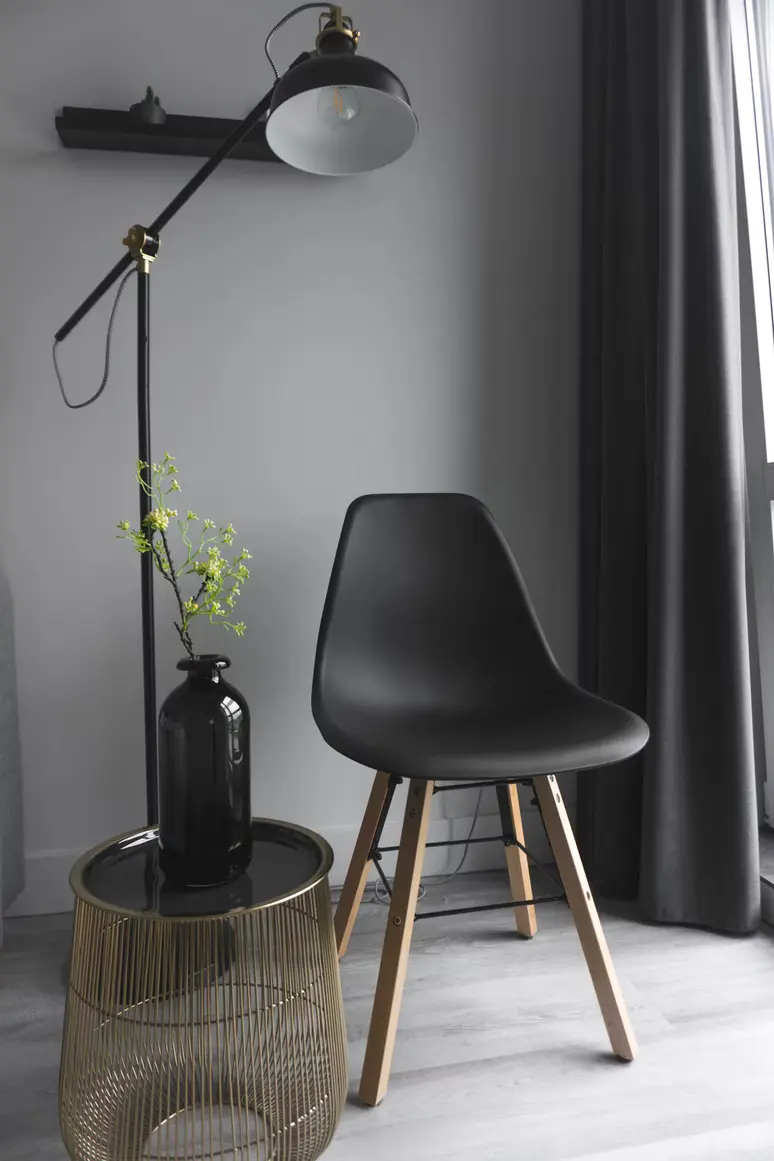
Black leads only in the furniture here: the chair and the floor lamp. The grey walls and the brass table keep the corner from looking heavy.
The role of white in the room
White can be the background or the main feature. Used on most surfaces, it makes a room look larger than it is. Add mirrors and metal fittings, and the room looks larger still.
A very pure, cold white can look clinical. In a study or a home office, that can be the goal; then use a lot of it. For a softer and warmer room, add neutral colors.
White goes with order and precision. It works best when the rest of the room has straight lines and a tidy layout.
The role of black in the room
Black is a classic color, but many people use too little of it, because they connect it with teenage rebellion. In fact, black adds depth to a room, creates negative space and makes other colors, white most of all, stand out by contrast.
Like white, black can be the base color of a room. Then it needs good accents. Accents add texture and stop the room from looking flat.
Black also works in small amounts. Use it as an accent instead of the main color. One example: a series of black-and-white pictures in black frames on a white wall.
How do you add color to a black and white room?
Add a few bright pieces against the monochrome background: they hold their own and do not fight it. Grey is the other route; black, grey and white rooms are a common and calm variant.
Many colorful rooms are interesting, but black and white rarely goes out of date. The two colors work together through contrast alone.
Rooms that combine black and white almost never split them equally. The exception is a chessboard-style design. Everywhere else, the 70-30 ratio from the first section is what holds the room together. Adjust the exact ratio to your taste.
Mirrors, shiny metal and polished surfaces suit a black and white room well, because they reflect both colors.
Black and white living room ideas: which three work in any home?
Texture, pattern and contrast. Each one works in any room, with any balance of black and white.
- Texture. Different textures give depth to a single color. In a black and white living room, mix textiles, finishes, high-gloss paint, tiles and matte surfaces. The eye then has more to read than two colors.
- Pattern. Black and white suits patterns well. Stripes, dots, geometric shapes and abstract forms can all work together. Furniture can join in with blocks of color and simple shapes.
- Contrast. The main strength of black and white is contrast. Put a black object next to a white one, and each stands out more. Use this to draw the eye to the objects or areas you want people to notice.
Common mistake: using all three ideas at full strength in one room. Pick one to lead, the same way one color leads in the 70-30 balance.
Try your balance on your own plan
Still not sure about a black and white room? The balance is easier to judge on your own floor plan than on someone else's photo. In Home Planner you can design a new home or change your current one, on your phone or computer, wherever you are. It is free to start.
Measure your space, draw 2D/3D floor plans, and furnish the rooms with products from real brands. Then make realistic images of the result, or start from ready-made layouts for a bedroom, a bathroom or a living room.
Try it on your own project
Free room planner and interior design app