Eclectic Interior Design: Meaning, History and Tips

What eclectic style means, where it came from, which traits hold a mixed room together, and how to mix styles without chaos.
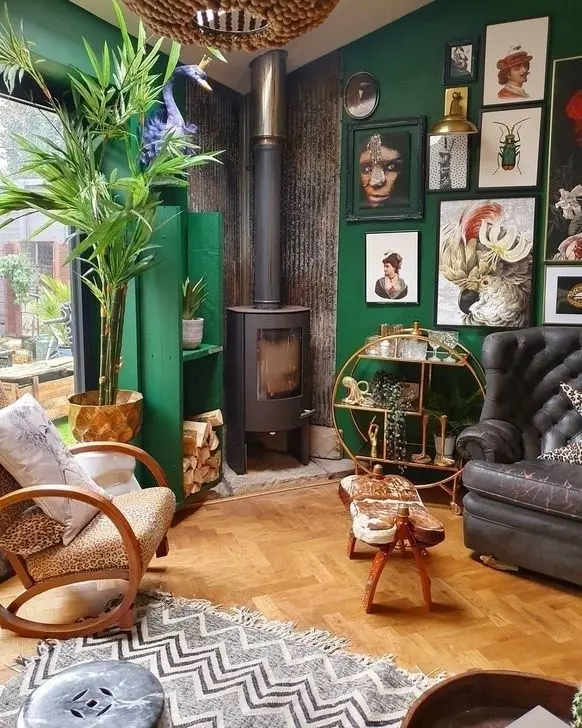
You have a grandmother's trunk, a modern sofa and a rug from a trip, and none of them match. Do you need to choose one style, or can they share a room? Eclectic interior design says they can share it, if you follow a few rules of balance. Below: what the style means, where it came from, what holds it together and how to furnish a room with it.
What is eclectic interior design?
Eclectic interior design takes the elements you like from several styles and combines them to suit your taste and your space. The word "eclectic" means "drawn from various sources". Its Greek root, "eklektikos", is closer to the idea of the style: "to choose the best".
So no two eclectic rooms are the same. There is no "right" or "wrong" eclectic design and no fixed list of rules. The usual rules of interior design still apply: colour and texture, contrast and juxtaposition. They serve the look of the room as a whole, not loyalty to one style.
A well-planned eclectic room brings different styles together in harmony. It takes ideas from many places and uses each one in proportion. That makes it a good starting point for new designers who are still finding their own taste. The style has room both for curious experiments and for deliberate steps in one direction.
Where eclectic style came from
At first, "eclectic" was a word from philosophy. It described how a thinker took the best ideas from several established schools and combined them.
The first use of the word in art is usually traced to the 18th century German art historian Johann Joachim Winckelmann. He used it for the works of the 17th century artist Annibale Carracci. Carracci combined styles, ideas and theories from different periods, and his works do not fit one strict category.
Eclecticism became an accepted approach in architecture in the late 19th and early 20th centuries. Designers stopped following one school of building, such as Byzantine, Neoclassical or Gothic Revival. They chose what was most beautiful, interesting or practical for each building.
From architecture the idea moved into interiors. Interior designers also put aside the fixed rules of theory and designed rooms with more freedom. The irony: by leaving fixed styles behind, they created a new school of design, eclecticism. Its value stays the same. It lets you enjoy work from many places and eras in one room.
What makes eclectic decor work?
Eclectic decor works when it borrows from several sources and none of them takes over. That is the only real limit: if one influence fills too much of the room, the room stops reading as eclectic.
First, choose the scale. In an eclectic home, each room can have its own style. Or one room can mix several influences. Or a single corner can hold decor from different sources. The right scale depends on your eye, on the size and shape of the space and, for a designer, on the client's wishes.
Then build the room from four elements:
- Colour. The base colour is almost always neutral. A calm background is what lets very different pieces sit together.
- Pattern. Patterns show a style most clearly. A range of patterns on furniture, curtains, rugs and art is a clear sign of an eclectic room.
- Accessories. Accessories come in every size, so they add a new influence to a space of any size. Small things brought back from trips to different parts of the world make a room varied at once.
- Vintage and modern. The contrast between the lines and patterns of old and new styles is a strong mark of eclectic design. Pair styles that like curves and softness with styles that prefer simple, firm lines.
With a neutral base, very different styles can share a room without one of them winning. After that, you can use as varied a palette as you like.
Common mistake: adding colour after colour until the room looks gaudy. Keep the base neutral and stop before the room gets loud.
How do you mix interior design styles without chaos?
Mix interior design styles around a calm base, and add the differences one at a time. Variety helps a room, but too much of it tires the eye. The aim is a welcoming room, not one that overloads the senses. Avoid placing very dissimilar colours side by side.
Give old pieces a second job. A double-purpose item adds variety and stays useful. For example, a vintage trunk can work as a coffee table. Set between low chairs in a modern or hi-tech style, it adds just enough contrast and still does its job.
Add art from the matching movement. Many decor styles have a direct link to an art movement. Once your eclectic room is in place, add works from those movements. To go one step further, hang art from one style in a room of another style.
Collect the art on a gallery wall. If you have a large collection, give it one wall. Arrange the works by period, by region of the world, or in a pattern that holds the eye.
An eclectic room is not easy to get right. Putting many different things together and hoping they work is not a method. It is easier to judge a mix on your own floor plan than on a photo of someone else's room.
Try the mix on your own plan
Not sure the trunk and the hi-tech chairs will work together? Try them in Home Planner first. Measure your space, draw a 2D and 3D floor plan, and furnish it with products from well-known brands. Then create visualisations to see how the mix looks. If you do not know where to start, open a ready-made layout for a bedroom, bathroom or living room and change it to your taste. Home Planner is free to start.
Try it on your own project
Free room planner and interior design app