What Is Minimalist Interior Design? Elements and Tips

Where minimalism comes from, the five elements every minimalist room shares, and how to keep a minimal home from feeling cold.
You clear the shelves, paint the walls white and put away half of the furniture. The room is calmer, but it also looks like a waiting room. Minimalism is easy to start and harder to finish well.
It fits in three words: less is more. So what is minimalist interior design in practice? It is a set of choices about what stays in a room, and the hard part is choosing.
The modern form of the style is often traced to the American architect Ludwig Mies van der Rohe (1886-1969). The idea is much older than him, and Japan practised it long before.
Where does Japanese minimalist interior design come from?
From the traditional Japanese idea of beauty, which is sparse. Much of it comes from the philosophy of Buddhism and Shinto. At the heart of both is the idea of doing the least damage to the natural world around us.
You can see this in traditional Japanese architecture, furniture and art: simple forms, natural materials, nothing extra. The result is a calm space that is good to live in.
Japan inspired the trend, but minimalism today is a much wider idea. Below are its elements, and then the ways to use them in a real home without making it feel empty.
Elements of a minimalist interior
Minimalism is not a strict set of rules. Still, the same five themes appear again and again in minimalist rooms.
Neutral colors
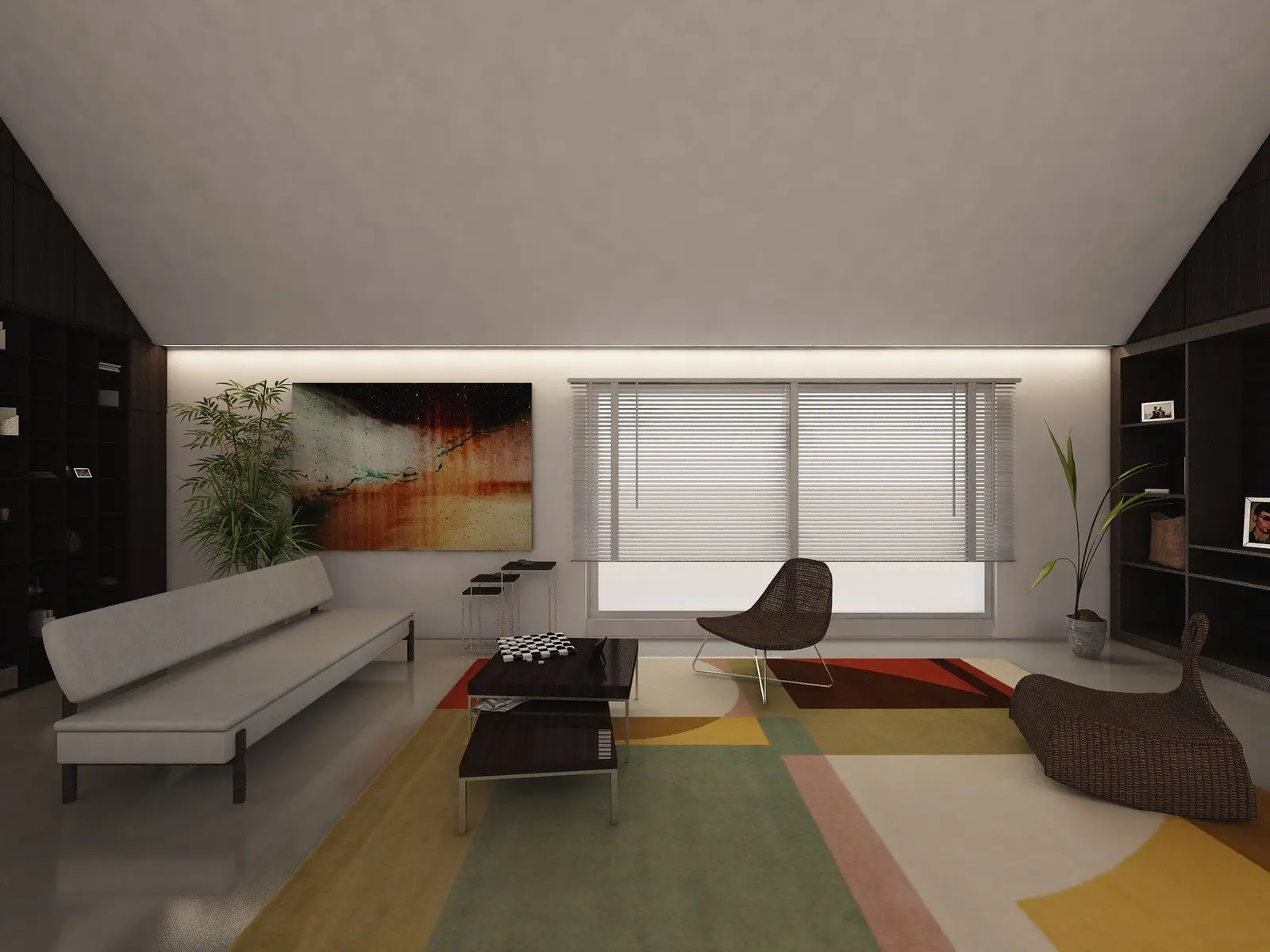
Quiet colors, such as white, cream and pastels, are minimalist by nature. Deeper shades can work too, but only as part of a monochrome palette.
A monochrome color palette
Ideally, a minimalist room uses one color in different shades. White and black are common, but most restrained colors work if you use them on their own.
Why it works: with one color, nothing in the room competes for attention. The trade-off: a room in one flat color can look unfinished. The tips at the end fix that.
Natural light
A minimalist room needs a lot of daylight. When you add lamps, choose soft, diffused light in gentle white or yellow tones.
Open space
Bare space is the core of the style. Accessories, accents, decor and even walls are kept to a minimum. Your eye should travel from one end of the room to the other without stopping.
Flat surfaces
Furniture and fittings follow the same rule as the walls: no complex detail. Look for long, straight lines and simple shapes.
Which minimalist interior design ideas are easy to add today?
Large tiles, single-stem plants and window walls. Smaller trends come and go, but minimalism stays, because simple rooms do not go out of date.
- Large tiles. Long, straight edges and flat surfaces make them a natural fit. White tiles are the standard, so they are easy to find and affordable.
- Plants. A single-stem plant with leaves or flowers only at the top adds texture without clutter. Light green, brown or gray stems and bark can almost replace decor.
- Window walls. Minimalism prefers open space without walls. When you need a wall, a window wall keeps the room open and lets in more natural light.
How does minimalist interior design for a small house solve crowding?
It keeps only what earns its space: functional furniture, closed storage and natural light. Many homes are over-full, with too many things in too little space, and minimalism answers that problem directly.
Choose functional furniture. A functional piece does its job completely and stays compact. The next step is multifunctional furniture: one object with several purposes and a small footprint.
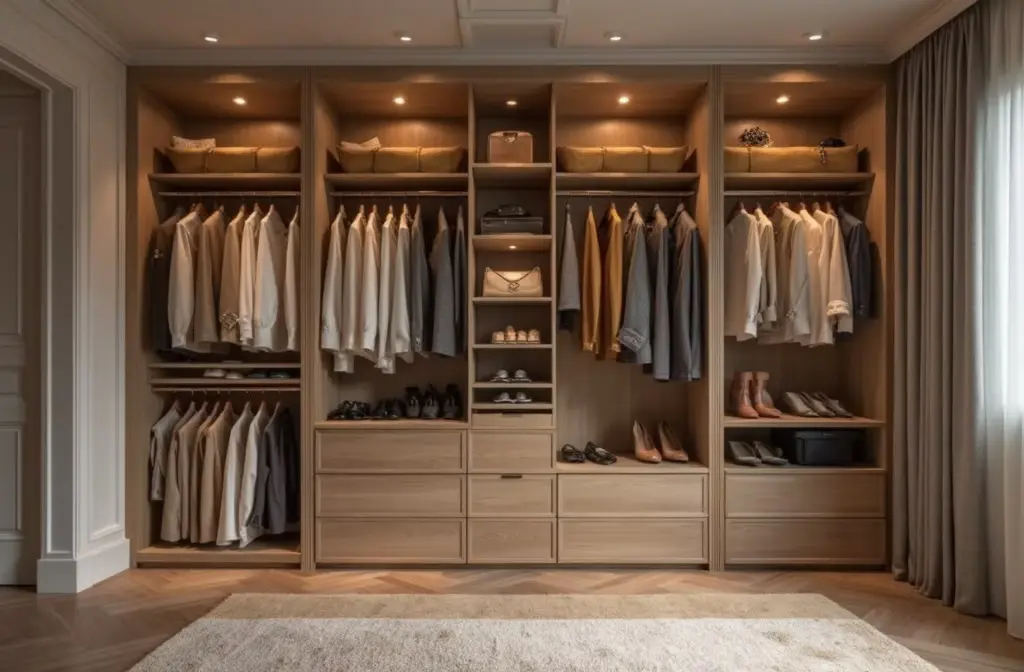
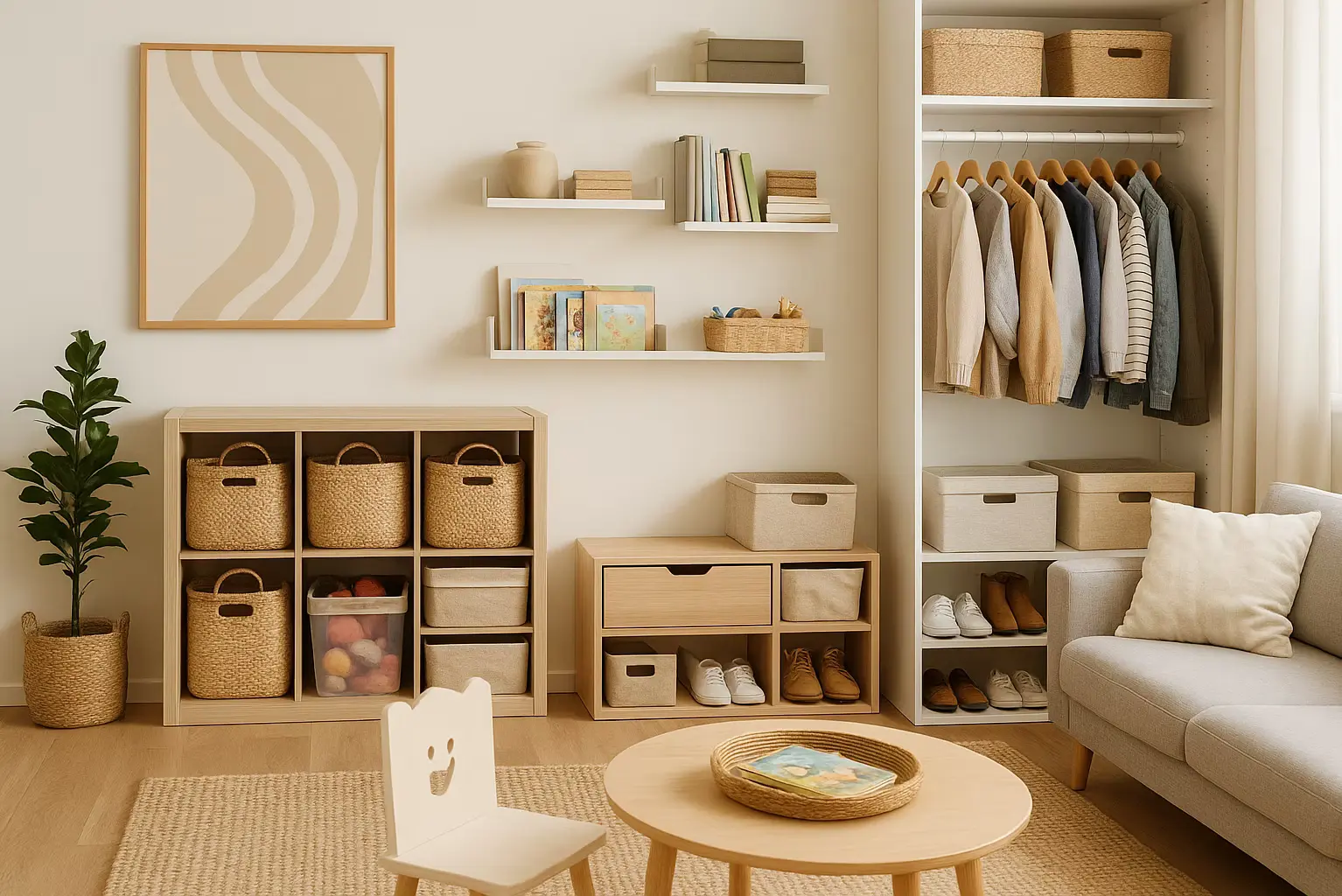
Declutter with storage. Enough of the right storage furniture removes visual noise from the room. Choose solid doors, not glass. The aim is to hide everything away.
Use natural light. Every extra lamp is one more object in the room. Large, open spaces with daylight need fewer lamps, and they make the room look larger, which minimalism depends on.
How to make a minimalist home cozy
Add variation that keeps the rules: shades of one color, texture and soft textiles. The main drawback of minimalism is that a room can lose its character. The eye looks for something to happen and finds little.
Shades and textures
Use different shades of one color to add variation without breaking the style. Place objects with small differences in shade next to each other. Repeat this over several objects, and the gradual shift in color looks calm and deliberate.
Grainy textures add tiny shadows and highlights to a surface. In a monochrome room, this play of light and dark gives the eye something to rest on.
You can also put different materials side by side. A gray mat on a gray concrete floor keeps to the rules of minimalism, but the two surfaces still look different.
Textiles
Soft, flowing textiles suit most rooms. In a minimalist home, cushions, rugs, tapestries, curtains and a few ethnic art pieces add depth. Mix the fabrics, for example satin, wool and cotton, and the effect comes easily.
Common mistake: a minimalist room feels cold, so you add a bright color. Try a second shade or a new texture first: a wool rug or a cotton cushion in the same color keeps the palette quiet.
Try minimalism on your own plan
Minimalism is a set of decisions about what to remove. Those decisions are easier to judge on your own room than on someone else's photo.
In Home Planner you can measure your space, draw a 2D and 3D floor plan, and furnish it with products from well-known brands. Try one quiet palette and one piece of furniture fewer, and look at the result in 3D before you change anything at home. You can also start from a ready-made layout for a bedroom, bathroom or living room. Home Planner works on your phone, tablet and computer, at any time, and it is free to start.
Try it on your own project
Free room planner and interior design app