Modern Interior Design Styles: Art Deco, Neoclassical and Hi-Tech

What makes a room modern, and how art deco, neoclassical and hi-tech styles handle furniture, color, materials and light.
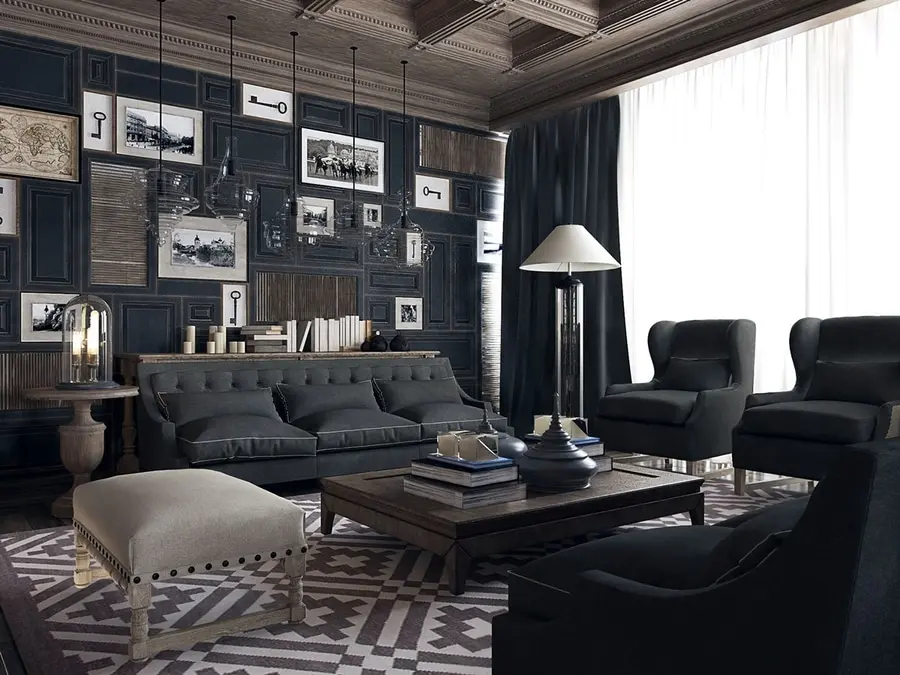
You like clean lines, but a gold-framed mirror and a parquet floor look good to you too. Can a room be modern and still have both? "Modern" covers more than one look. This guide compares four modern interior design styles: the modern interior itself, art deco, neoclassical and hi-tech. For each one you get the features, furniture, colors and lighting, and where the style can go wrong.
What is modern interior design?
It is a simple, practical style with clean, straight lines, earthy colors and little decoration. The style keeps changing, so it is harder to define than most. At its heart is modern art, used as part of the room.
Its roots are in Scandinavian and German architecture and design, both known for simple, fuss-free ideas. Earthy colors are common, often close to monochrome, sometimes as far as whitewashed rooms. Furniture, fittings and even art have little detail.
Furniture. Modern furniture almost always stands on exposed legs. This is true for chairs, ottomans and sofas alike.
Materials. A modern home often mixes several materials, but they stay within earthy tones:
- wood;
- stone;
- leather, real or imitation.
Purpose first. Compared with similar styles, a modern interior cares less about looks and more about use and purpose.
Minimal, but warm. The style uses a lot of minimalism, so lines are clean and straight. Yet a modern room keeps a warmth that a purely minimalist room often lacks. The reason is the balance of warm, earthy shades: browns and greens are common.
Open space. A modern interior likes open plans: areas that flow into each other without walls or partitions. Two common examples are a kitchen next to the dining room, and a living room that opens into an entertainment area. The result still feels airy and free. The trade-off: with fewer walls, the furniture has to mark where each area ends.
What defines art deco interior design?
Bold geometry, gold, polished metal and large furniture. Modern shapes, made to look luxurious.
Art deco takes its name from Arts Décoratifs, after the Exposition Internationale des arts décoratifs et industriels modernes (International Exhibition of Modern Decorative and Industrial Arts), held in Paris in 1925. The style connects classical and modern interiors. Fine craftsmanship is its hallmark.
Many people like art deco, but some of its elements last longer than others.
Statement mirrors. These lead the list. The metal frame is the point, especially when it is polished to a bright shine, and the mirror can take almost any geometric shape.
Geometry. Strong geometric shapes are central to the style. Shapes built on triangles, such as pyramids, hourglasses and cones, are common as bases or stands. Look for them on dining tables, coffee tables and even seating: they show at once that the room is art deco.
Gold. The style comes from the 1920s, a loud and showy decade, so shine matters. Gold accents on decor and furniture fit naturally. Add an object typical of the 1920s, such as a drinks trolley, to complete the effect.
Large furniture. Art deco is not subtle, so every piece needs a large footprint. Choose an oversized, soft sofa in bold solid colors, ideally with a frame of solid, heavy wood such as teak. The trade-off: in a small room, one such sofa can fill the floor, so measure before you buy.
Art from the era. For a direct link to the 1920s, hang black-and-white prints of the stars of that time. Each frame should be large, gilded and imposing.
How do you recognize neoclassical interior design?
By its calm, aristocratic look: soft bright colors, wood and parquet, paneled walls and layered light. It is a modern take on classical interiors, and where art deco is loud, this style is quiet. Wood is everywhere: in the furniture, and in the floor as geometric parquet.
The style looks to the past, so a fireplace, real or imitation, is common in a neoclassical home.
Ceiling. Look up: the ceiling is white, matte or satin, sometimes with a decorative rosette around a chandelier.
Walls. Walls have panels in straight, neat blocks. For variety, some designers soften them with floral motifs.
Fabrics. True to its history, the style uses natural fabrics almost only, for curtains and for floor coverings. Rugs should not be too large. A good rug quietly marks out one central object or area.
Lighting. Light is built in layers, and the layers work together:
- a chandelier;
- several floor lamps, placed asymmetrically;
- ornate wall sconces.
Bedroom. Here a large, elegant bed is essential, usually with matching bedside tables or chests of drawers. Above the bed, place a round mirror with an ornate frame, or a piece of art that draws the eye in the same way. A large chandelier or a pendant light on a long stem in the center of the ceiling completes the room.
Which materials define high tech interior design?
Plastic, metal, glass and chrome, with smooth, plain surfaces and the working parts hidden. The style turns technology into decor.
Hi-tech interiors came from the technology boom of the late 20th century. The style uses new, durable materials to make objects that are practical and usually smaller than the ones before them.
Look. Together these materials give the room a futuristic look. Fittings and fixtures often hide their working parts behind panels. Furniture is minimal and purely practical, with simple geometric shapes.
Walls. Light, neutral colors work best:
- white;
- concrete;
- beige;
- light gray;
- cream.
Clear or frosted glass, polished metal and mirrors make the room look larger and stay true to the style.
Floors. The floor is almost always glossy, whatever the material. Good choices:
- vinyl tiles;
- porcelain stoneware;
- laminate.
Leave out rugs and other textile floor coverings, and avoid prints and patterns. To match the high-tech character, the floor can even have temperature control.
Decor. Some homeowners add a neon sign. Prints of science-fiction movie posters and official merchandise also fit. The trade-off: keep these to a minimum. A hi-tech room does not work with many objects that pull the eye.
Try a style on your own plan
A style is easier to judge in your own room than in a photo. Draw your room in Home Planner and try art deco, neoclassical or hi-tech furniture on the same plan before you buy anything.
In Home Planner you can measure your space and create 2D and 3D floor plans. Decorate and furnish the room with products from furniture brands, create visualizations of the result, and start from ready-made layouts for a bedroom, bathroom or living room.

Try it on your own project
Free room planner and interior design app