TV Placement in Living Room: Height, Distance and Sound

Set the TV height, the sofa distance and the speakers, then check the layout on your own plan before you drill.
The sofa is on one wall and the TV on the other. Before you drill holes, three numbers decide whether the room works: how high the screen hangs, how far the sofa stands from it, and where the sound comes from. Good TV placement in living room layouts comes down to those three, plus one socket.
TV height in living room: how high?
At eye level when you sit. With a typical sofa, the eyes of a seated adult are about 105–115 cm (41–45 in) above the floor, so that is where the centre of the screen goes. Measure from the centre, not from the bottom edge: a larger TV hangs with its bottom edge lower.
Why it matters: you look at the screen for hours. If it hangs too high, you watch with your head tilted back. The most common case is a TV above a fireplace. It looks tidy, but it is usually well above eye level. If the fireplace wall is the only option, choose a mount that tilts the screen down.
Quick check: sit on the sofa, look straight ahead and ask someone to mark the wall where your eyes land. That mark is the centre of the screen.
How to read a TV viewing distance chart?
Find the screen size, then the recommended sofa distance next to it. The chart below gives the distance from the screen to the sofa for six common sizes:
| Screen size | Distance to the sofa |
|---|---|
| 40 in | 1.8 m |
| 48 in | 2.2 m |
| 50 in | 2.3 m |
| 58 in | 2.6 m |
| 65 in | 2.9 m |
| 85 in | 3.8 m |
If the sofa is closer than the chart says, the screen fills more than you can see at once, and you turn your head to follow the picture. If it is much further away, a smaller screen gives you the same picture.
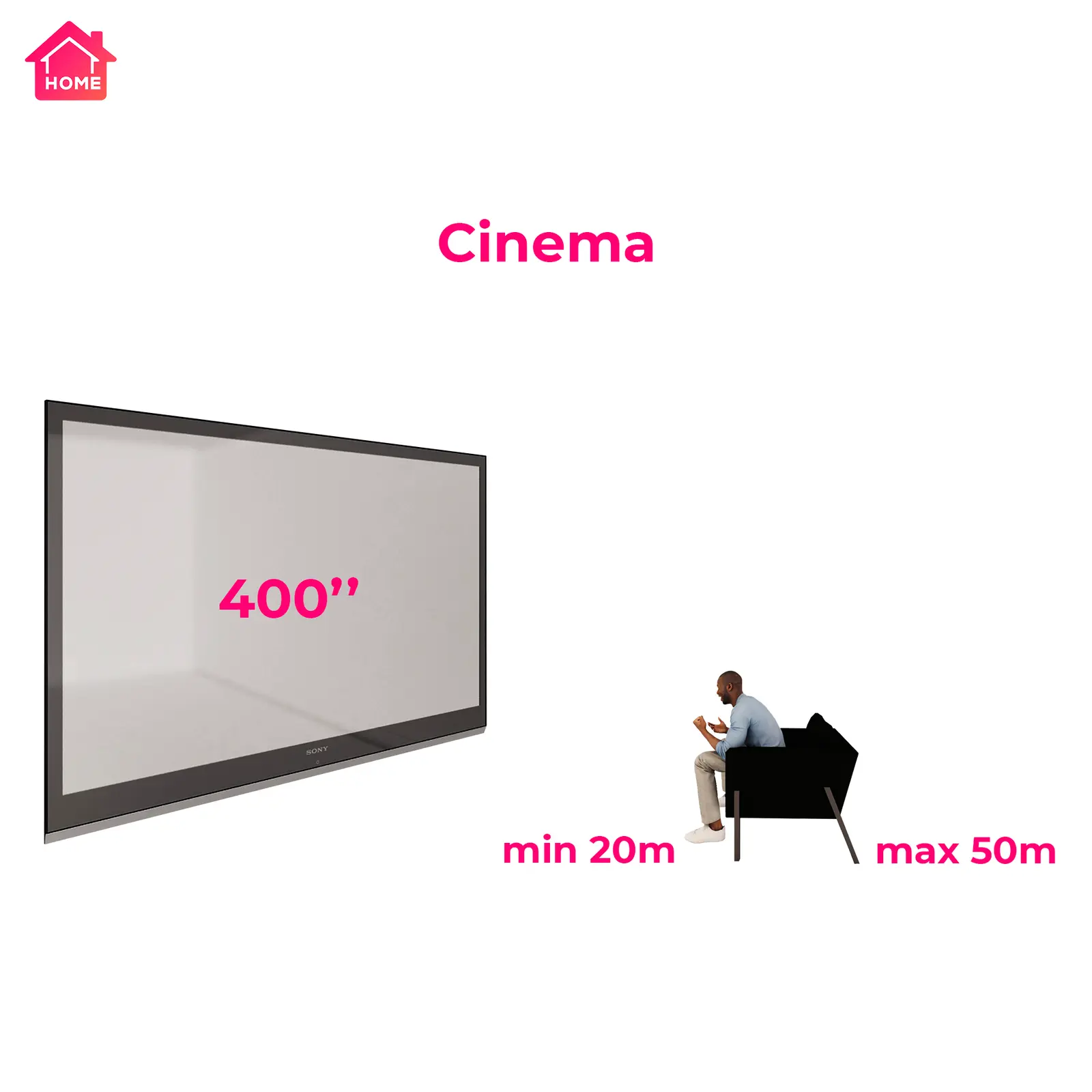
In a cinema the same idea works at a different scale: a 400-inch screen is watched from 20 to 50 metres away.
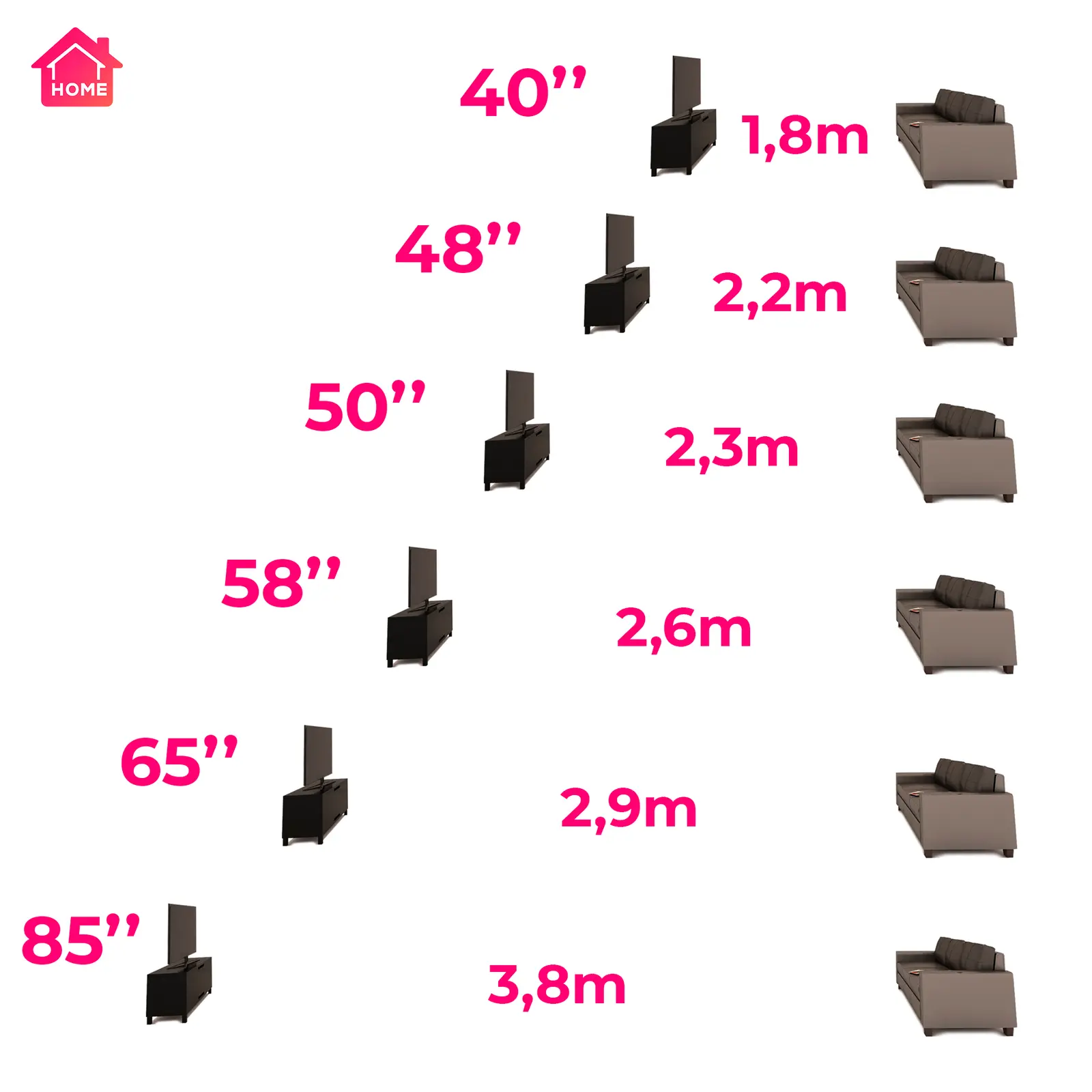
The bigger the screen, the further back the sofa goes. Use the chart in reverse when the room is fixed: measure the distance first, then choose the size.
Is the TV the focal point?
Then centre it on the seating area. The sofa faces it, the armchairs turn toward it, and the rest of the room follows.
If not, hide it or build it into a unit such as a bookcase. A dark screen in the middle of a white wall draws the eye even when it is off. Among books and boxes it becomes one more dark rectangle on the shelf.
Also check the windows. A window behind the sofa reflects in the screen during the day. A window behind the TV makes the screen look dark against the bright glass. A side wall is usually the safest choice.
Home theater speaker placement: what works?
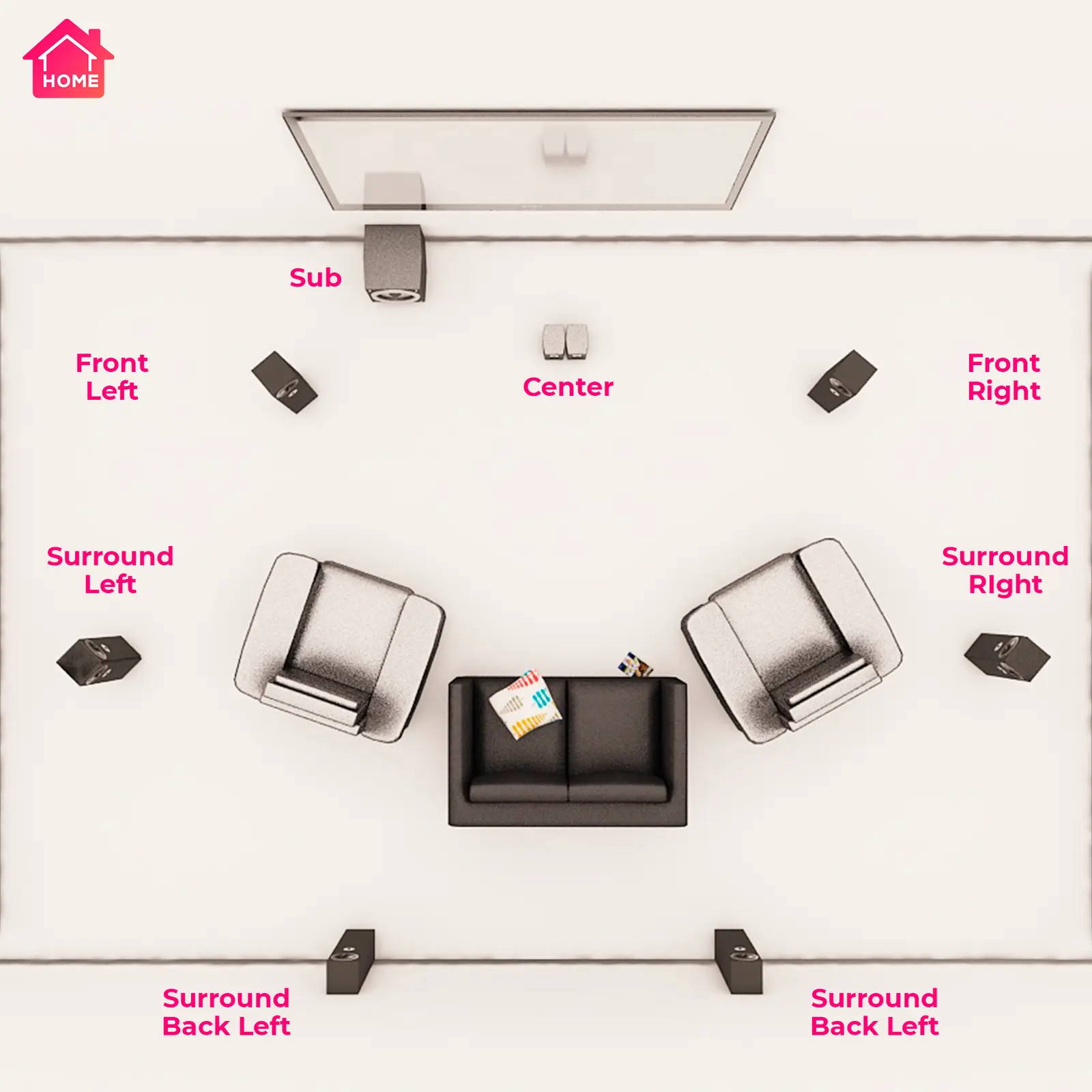
Place the speakers around the seating so the sound meets where you sit. The cover image shows a full layout:
- Front left and front right stand on either side of the screen, turned slightly toward the sofa.
- The centre speaker sits just below or above the screen. It carries most of the speech, so it points at the listeners.
- The subwoofer stands near the front. Low sounds have no clear direction, so its exact place is less important.
- Surround left and right stand at the sides of the seating, level with the listeners.
- Two surround back speakers stand behind the sofa.
The sofa goes in the middle of that circle. If it stands against the back wall, there is no room for the back pair, and the sound reaches you from the front and sides only.
Before you drill: find the power outlet closest to the TV spot. Plan the cables for the speakers at the same time, before the furniture is in place.
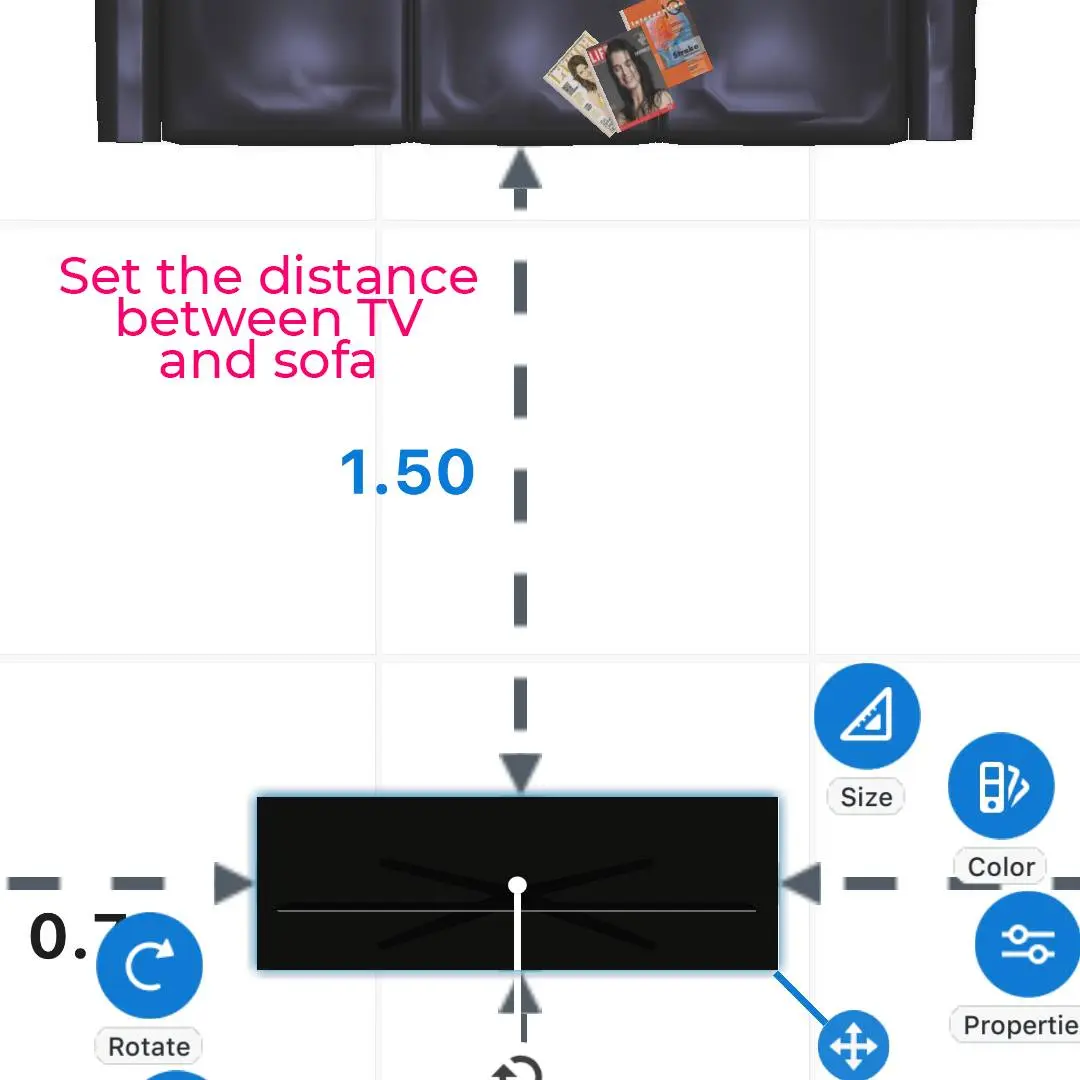
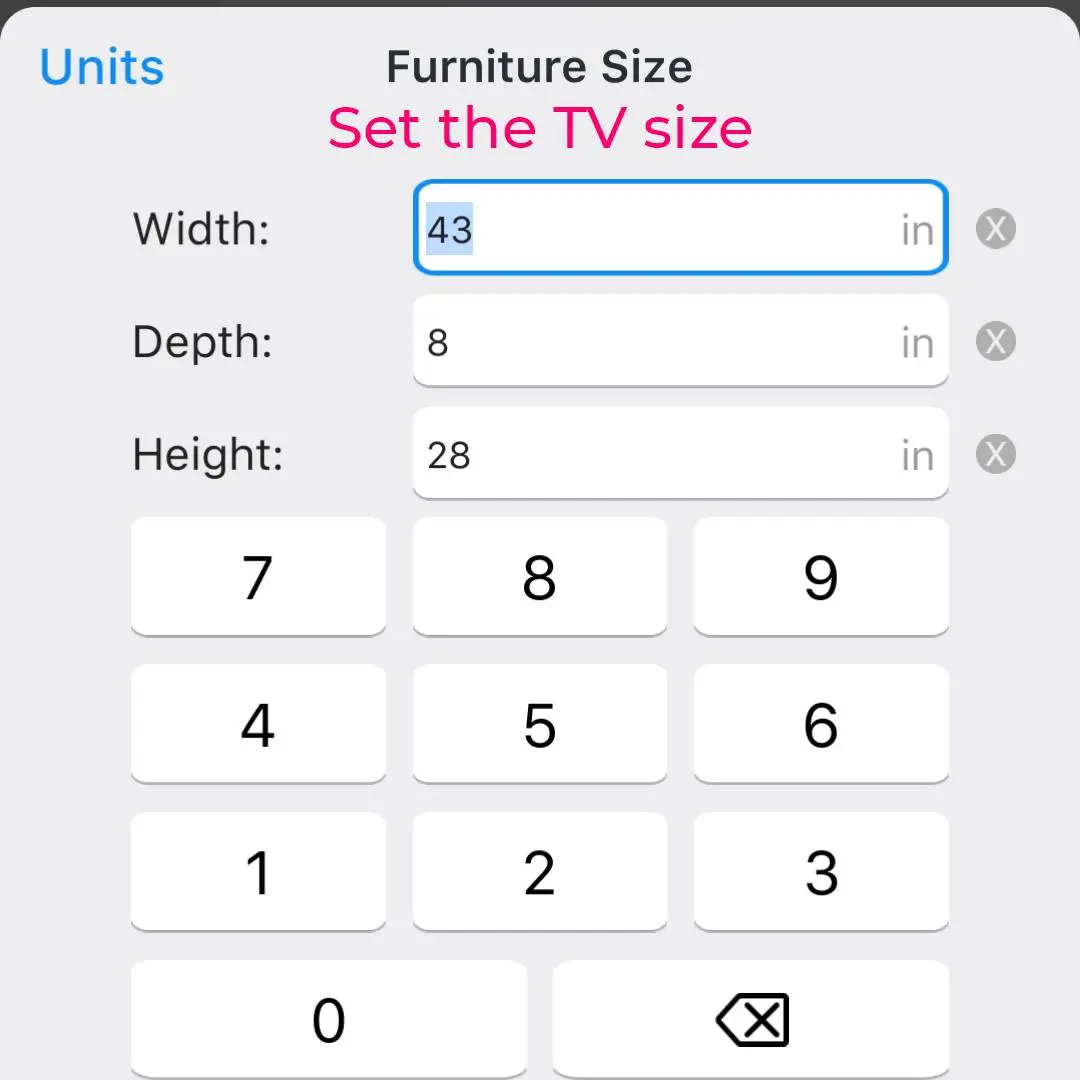
In Home Planner, the ruler measures the TV-to-sofa distance, and the size dialog shows the TV's width, depth and height.
You can also measure rooms, see them in 2D/3D, furnish them with brand products, create visualizations and start from ready-made room layouts.
Not sure which wall suits the TV? Try both on your own plan in Home Planner, and check the distance to the sofa against the chart before you buy the screen.
Try it on your own project
Free room planner and interior design app